
Venue & FAQ
Where it happens, and the questions every family asks
GSP'27 runs on two MAHE campuses — MAHE Manipal in May, MAHE Bengaluru in June. Everything below is true of both unless it says otherwise.
May program · 9–29 May 2027 · 3 weeks
MAHE Manipal
The TAPMI campus, MAHE Manipal — a full university campus near the coast
Nestled in the coastal town of Manipal, MAHE (Manipal Academy of Higher Education) is a UGC-recognised Institution of Eminence and one of India's top-ranked private universities — a lush green campus, world-class labs, Marena (one of Asia's largest indoor sports complexes) and Kasturba Hospital, a multi-speciality teaching hospital, minutes from the hostel.
Getting there: Mangalore International Airport is about 65 km away; Udupi railway station, on the Konkan line, is about 5 km from campus. Families can drop off directly on arrival day.
The university's own campus film. Official site: TAPMI, Manipal · MAHE Manipal campus
June program · 13 June–3 July 2027 · 3 weeks
MAHE Bengaluru
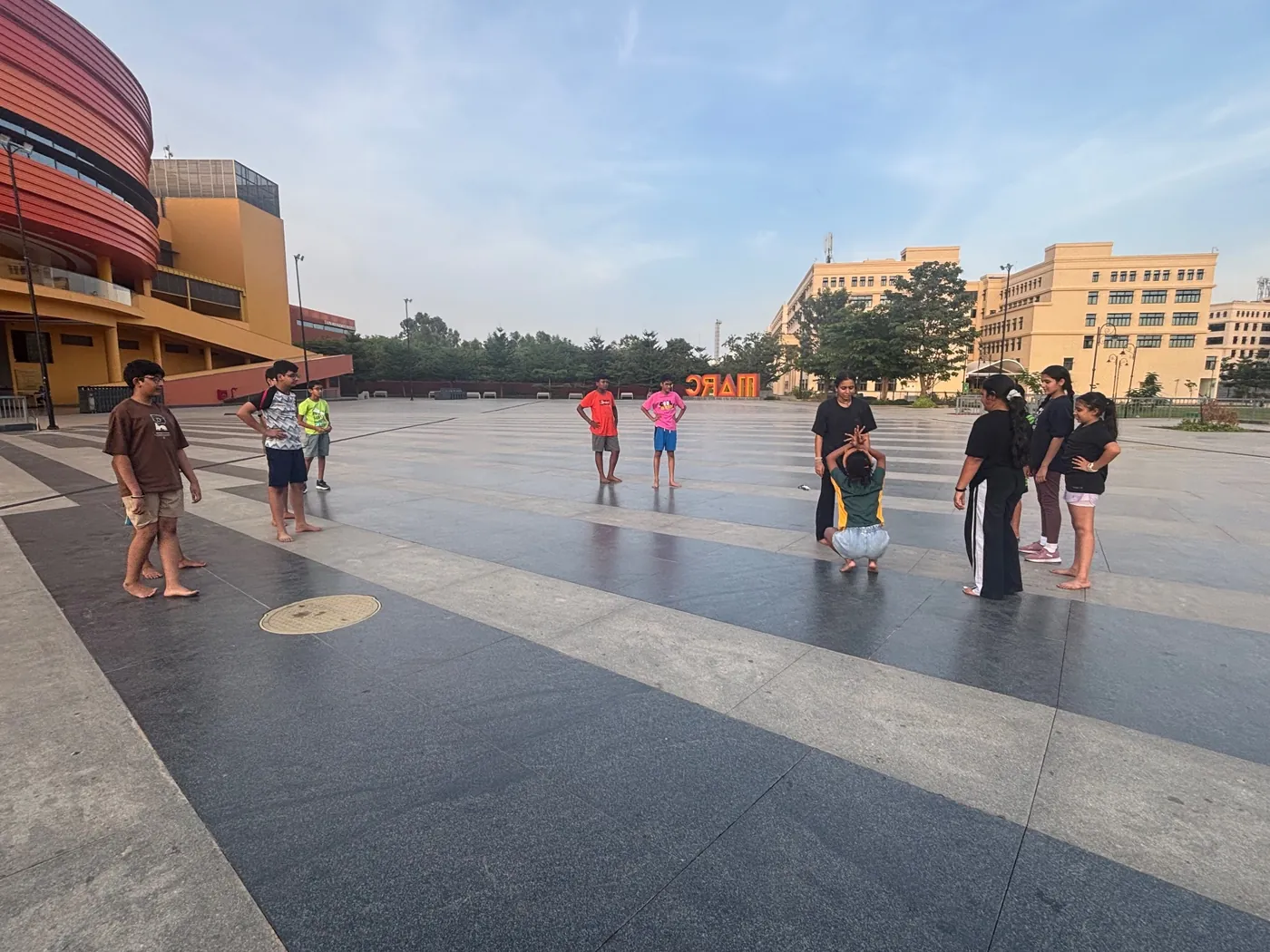
An 80-acre university campus in Yelahanka, north Bengaluru
MAHE Bengaluru sits at Govindapura, Yelahanka — a green, 80-acre campus with its own academic and residential blocks, well away from the city centre's traffic. The June program runs under its own arrangement with the university: the same two-to-a-room hostel floors reserved for GSP, the same supervision, the same catering to each child's form, with city hospitals close by.
Getting there: Kempegowda International Airport is about 20 km away, and Bengaluru is a direct flight or train from most Indian cities. Families can drop off directly on arrival day.
The university's own campus film. Official site: MAHE Bengaluru campus
- Room
- 2 students · AC · attached bath
- Supervision
- ~1:5 — one coach or TA per five students
- Medical
- Nurse on site · doctor on call 24×7 · hospital minutes away
- Phones
- 30 min at 9pm, to call home
- Campus
- NAAC A++ accredited
Life on campus
The practical part
Where they sleep
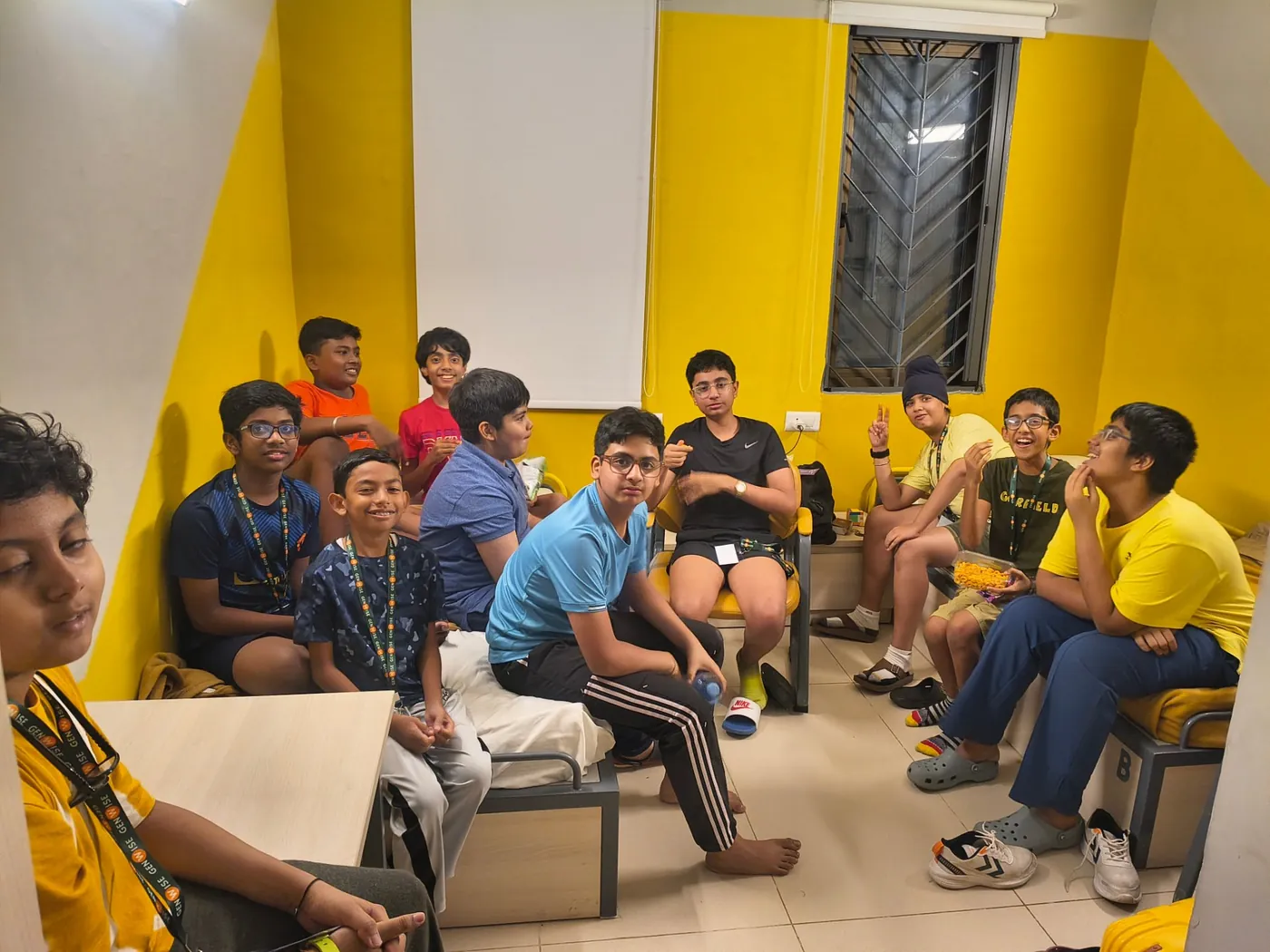
Separate MAHE hostels for boys and girls, with floors reserved entirely for the program — no unauthorised person is allowed on them. Two students to an air-conditioned room with an attached bathroom and 24/7 hot water; residential coaches' rooms sit between the students' on the same floor.
Where they learn
Fully air-conditioned rooms in the academic block, with high-speed internet and seating that rearranges to fit the day — lab, debate floor, or build space.
What they eat
Breakfast, lunch, evening snacks and dinner, veg and non-veg lines, spice kept low, Jain and Halal on request. Medical and dietary needs are collected on a form before arrival, so catering is arranged to each student's stated requirement ahead of the program.
How they move
Buses and vans are private to GSP — nobody aboard but students and GenWise staff. Students never travel alone; at least one adult accompanies them and every driver is vetted.
Round-the-clock security at the main entrance and every dorm lobby; no child is ever left unaccompanied. The full safety spec sheet
In pictures
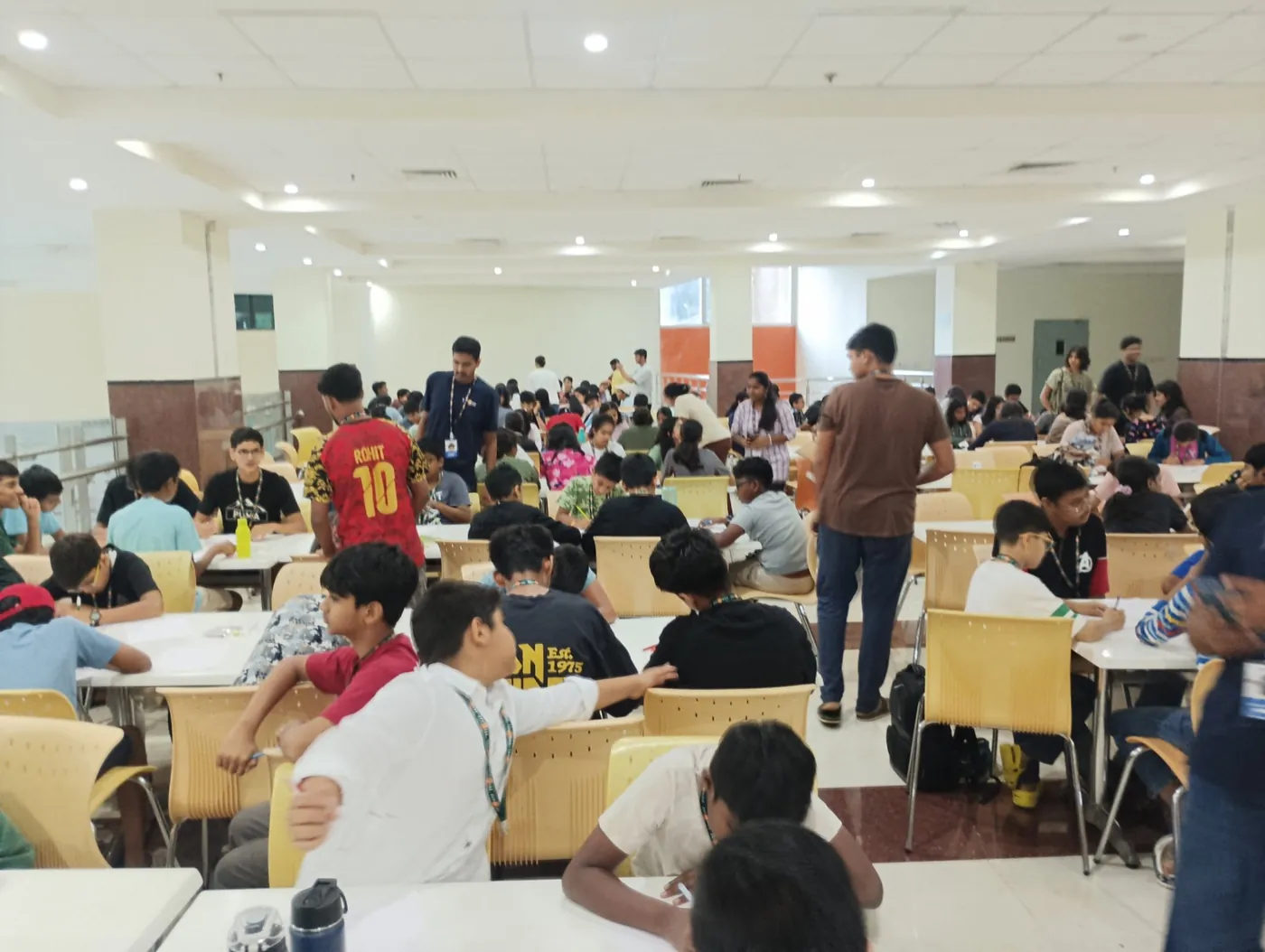
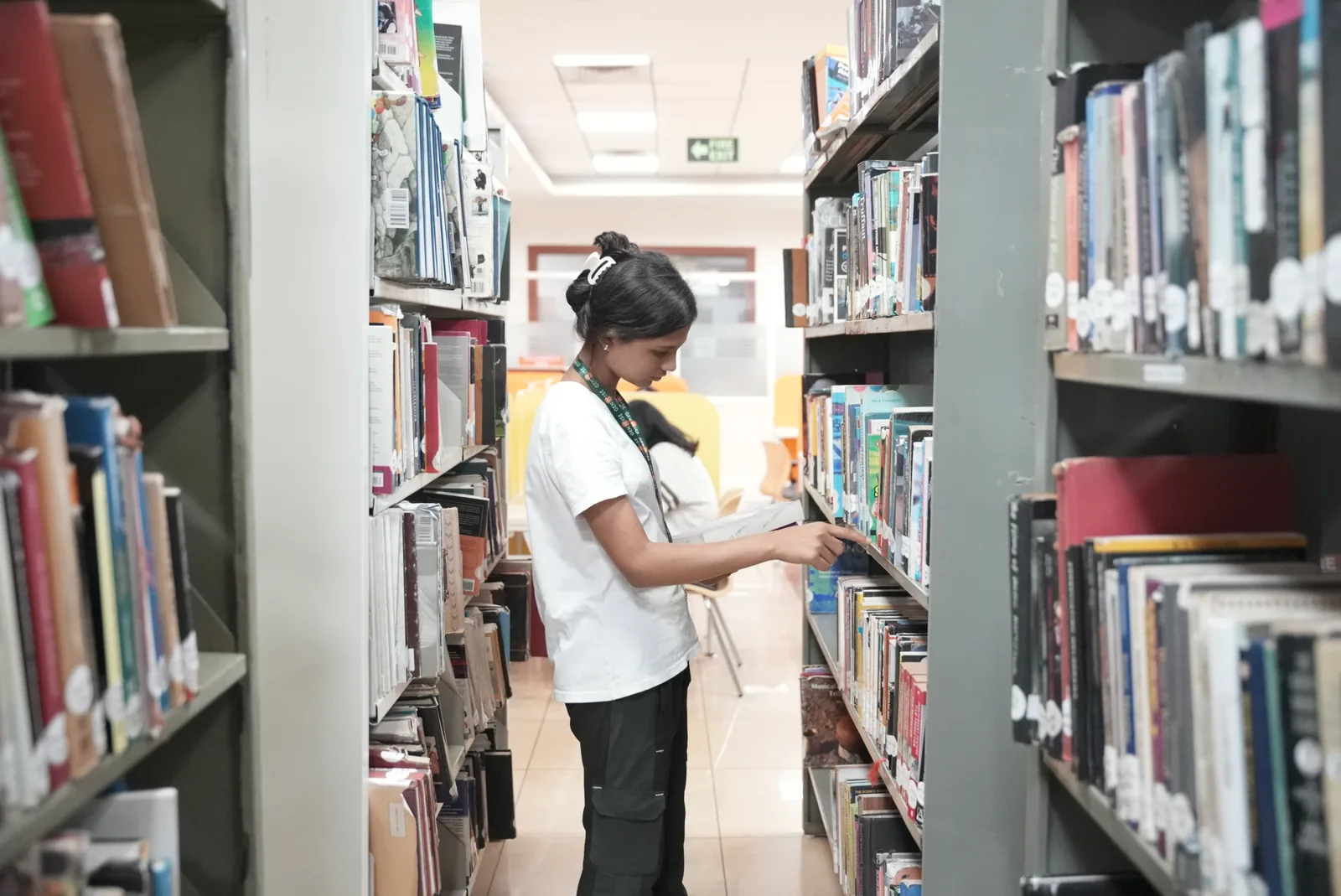
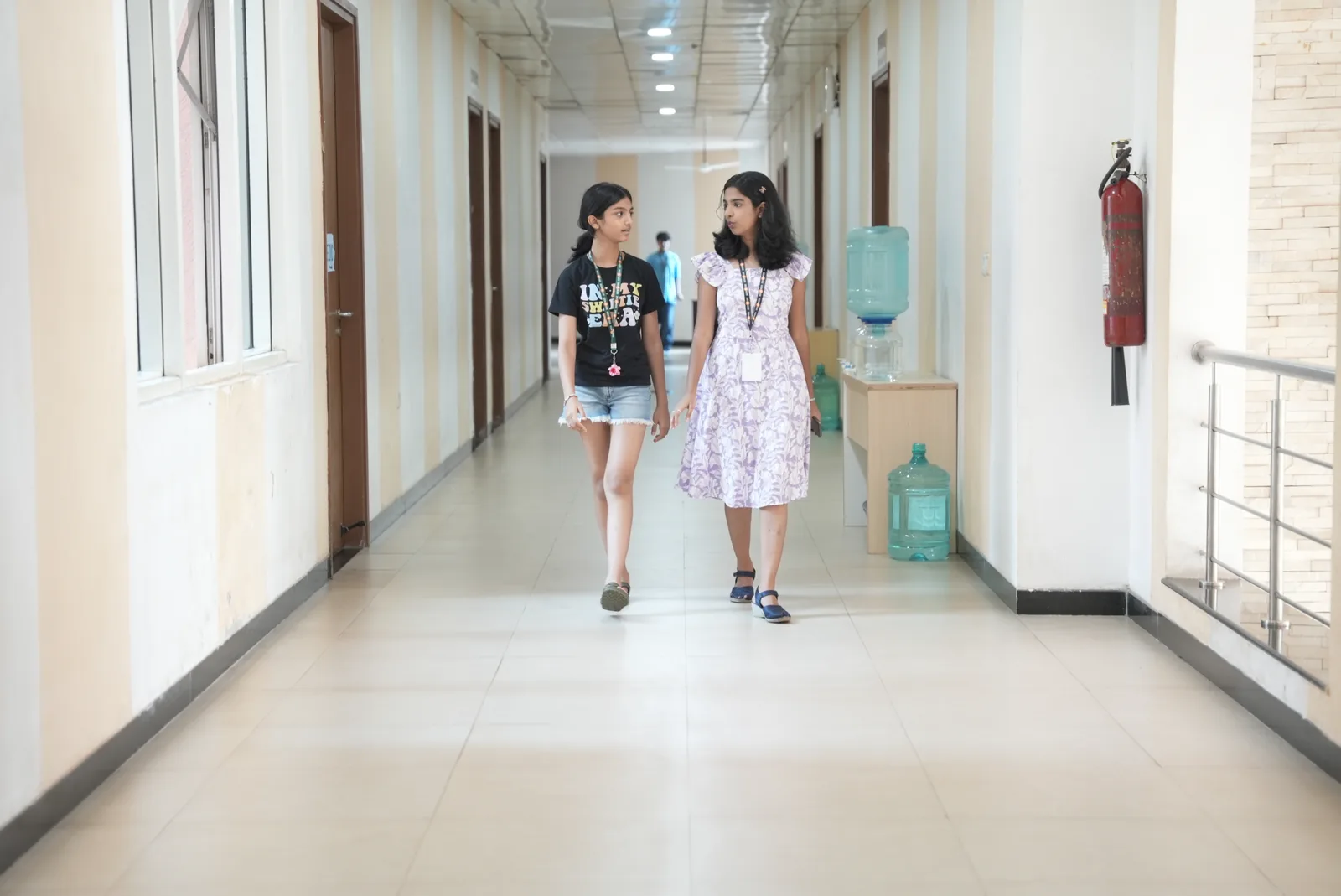
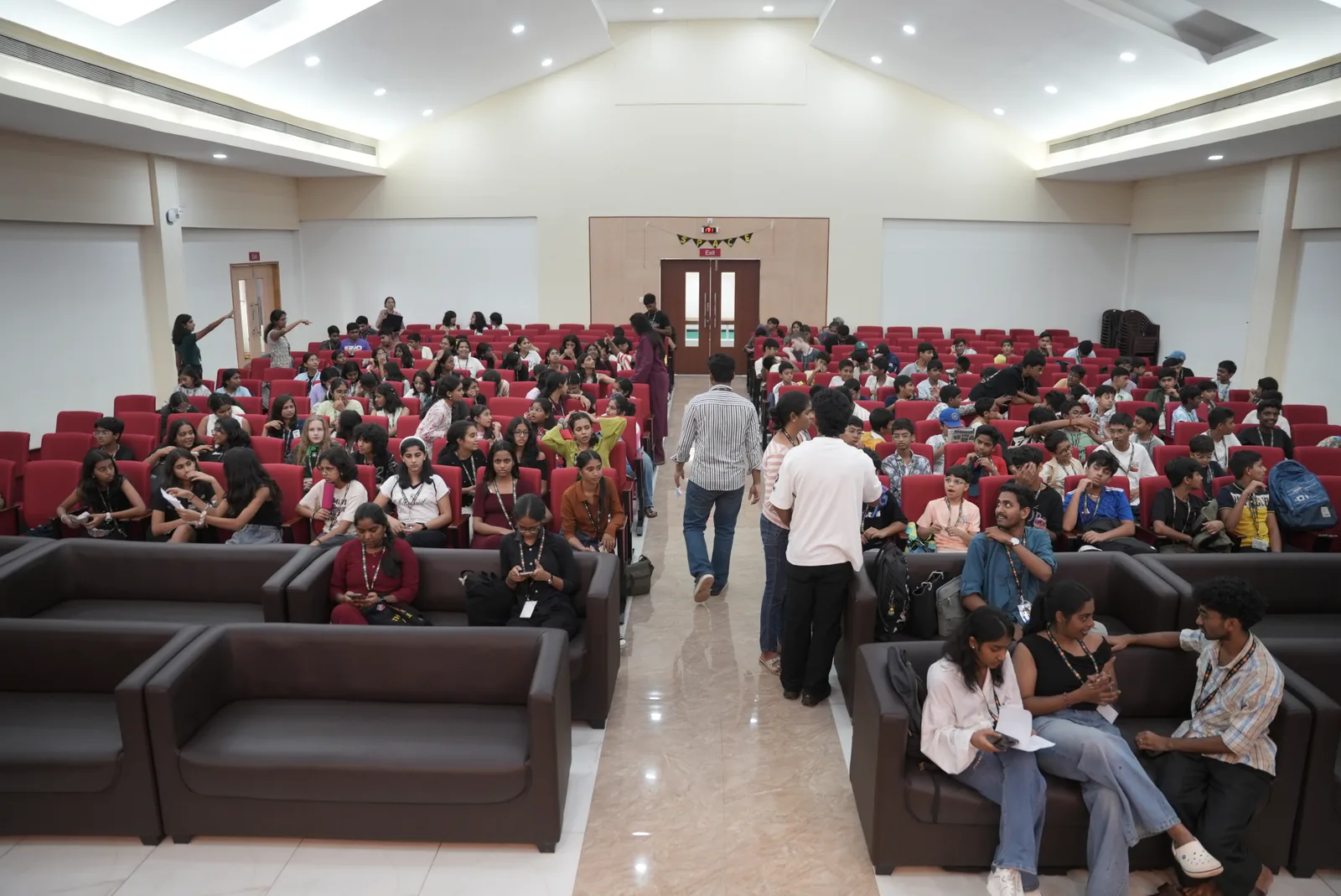
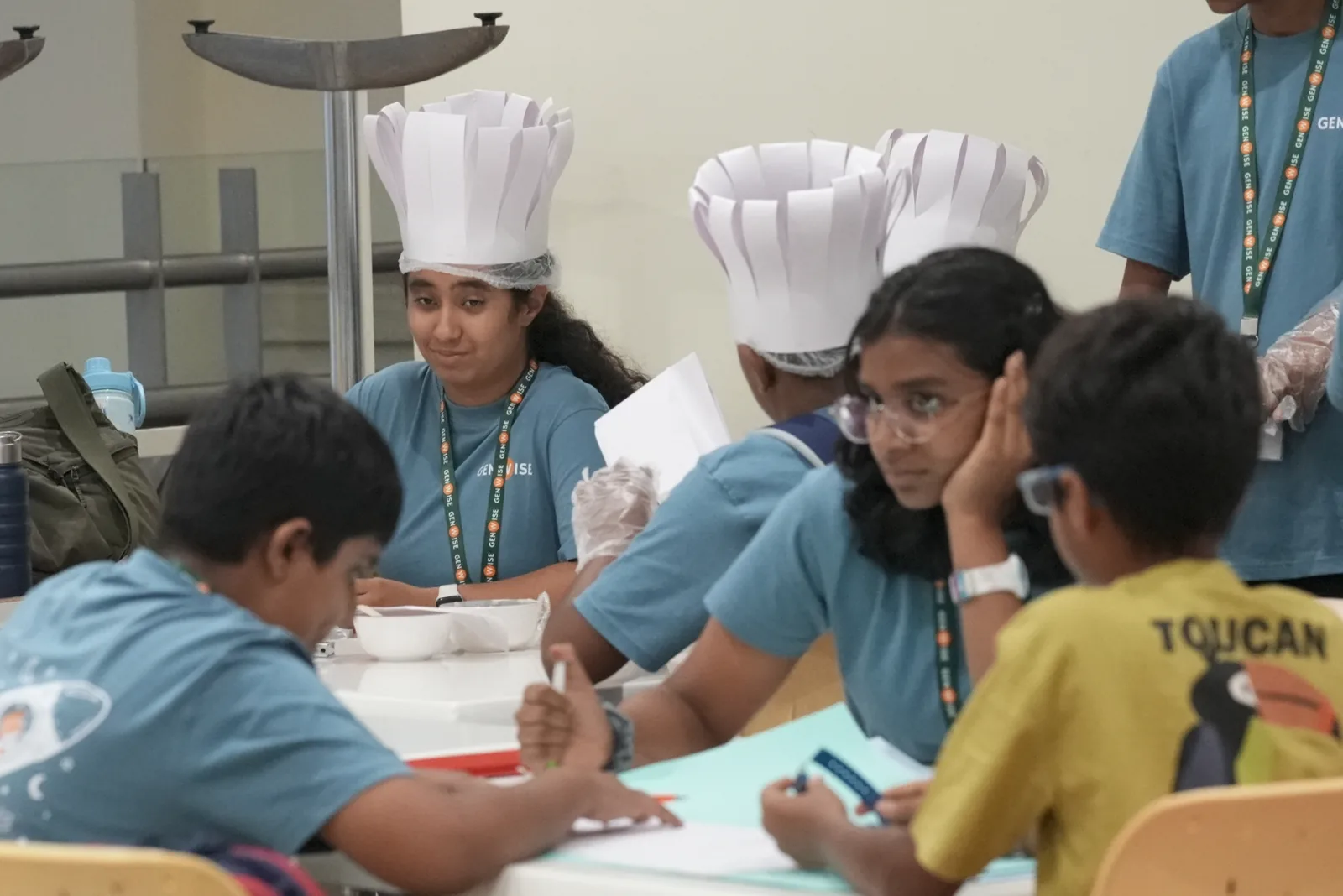
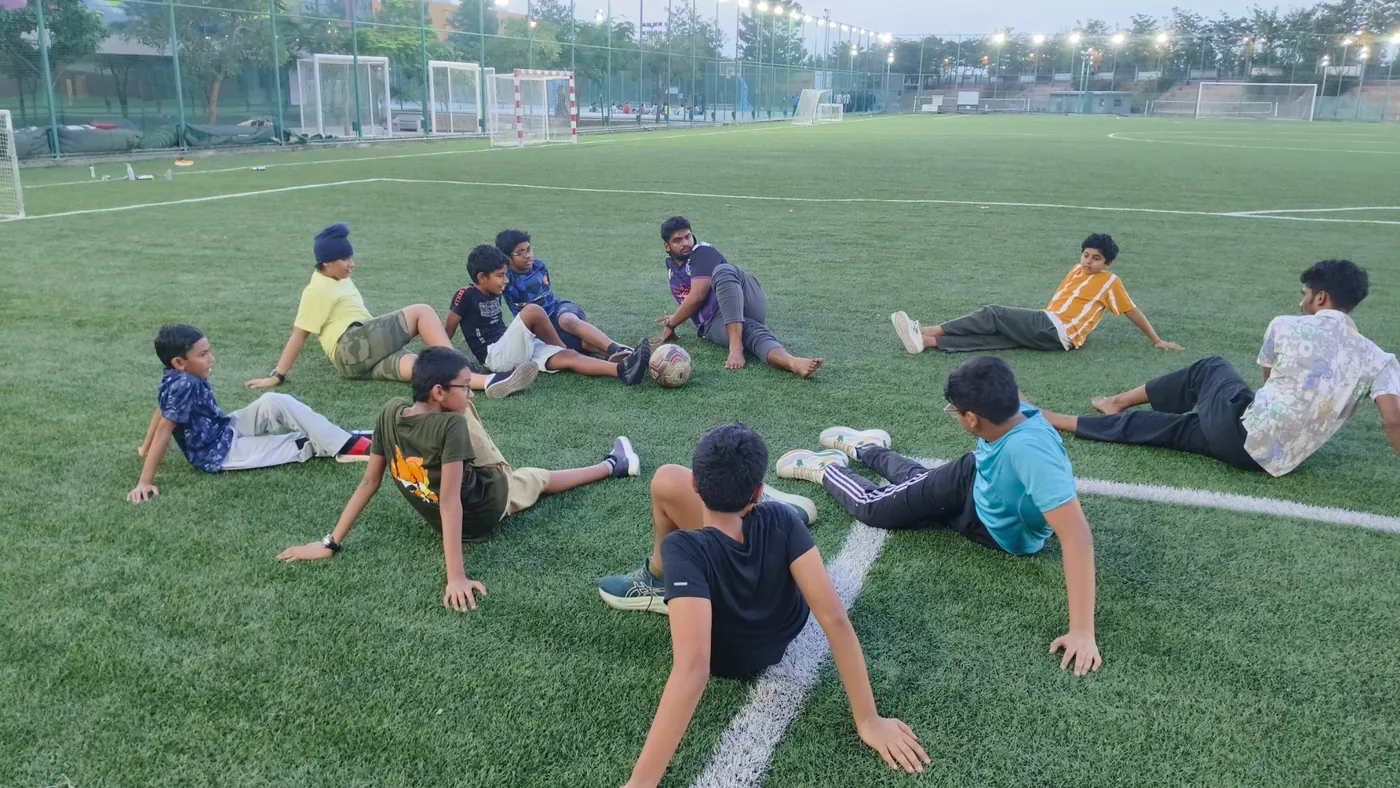
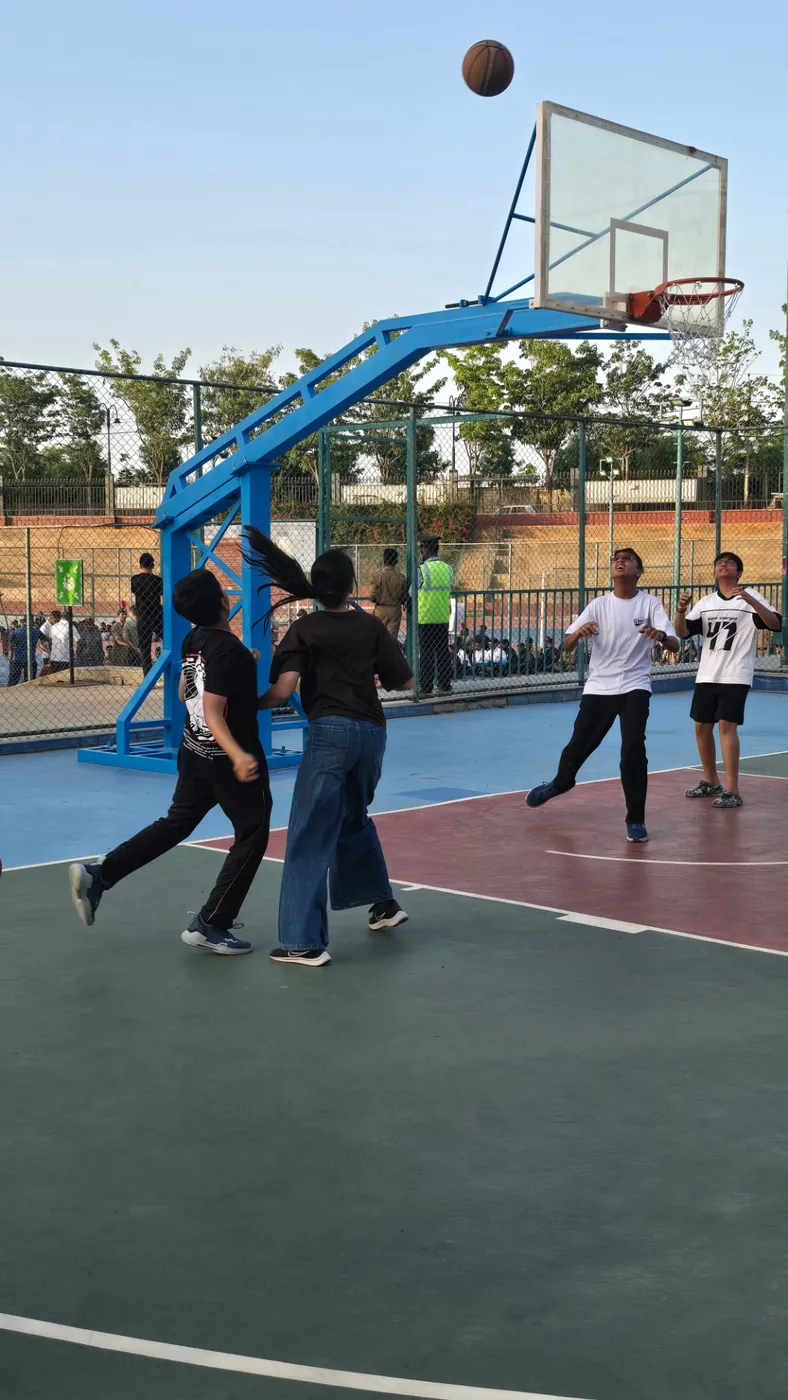
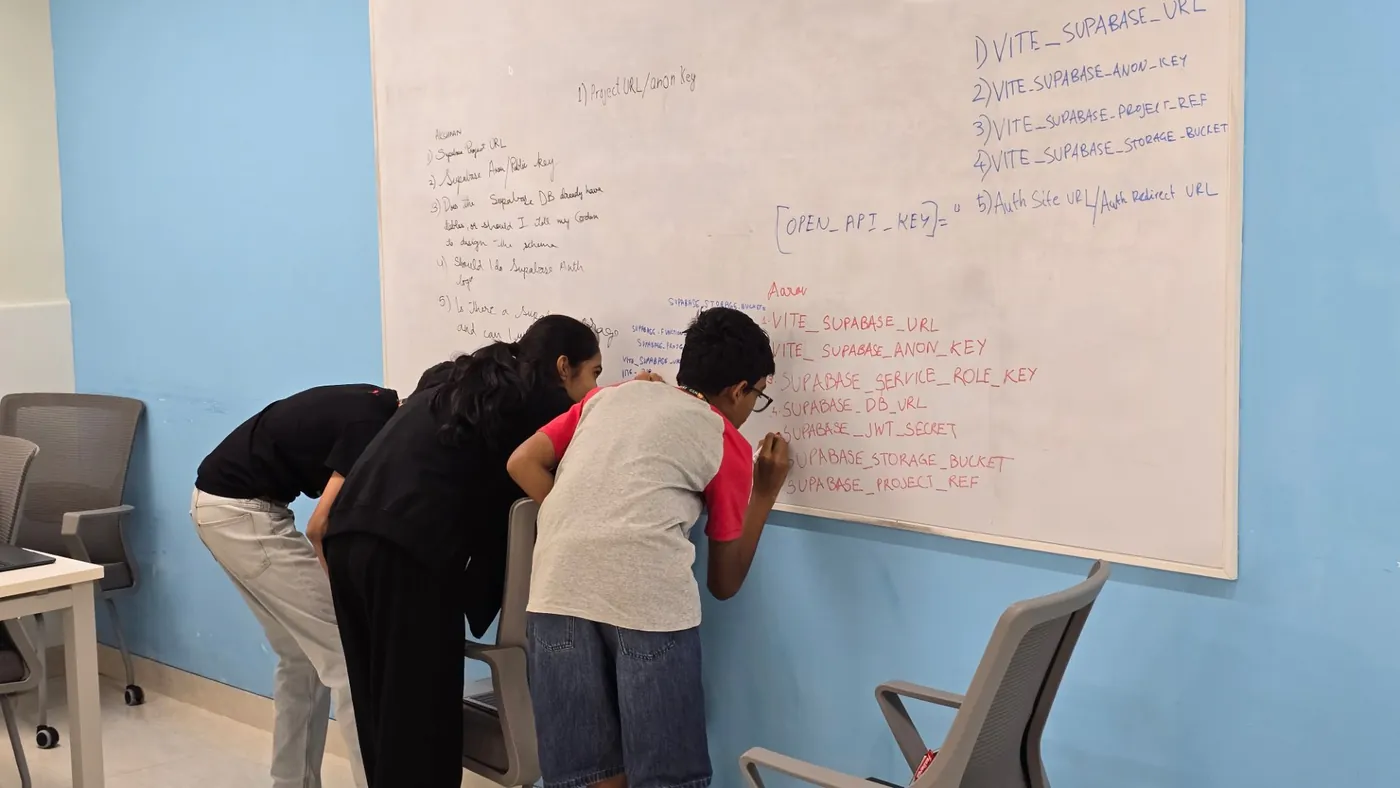
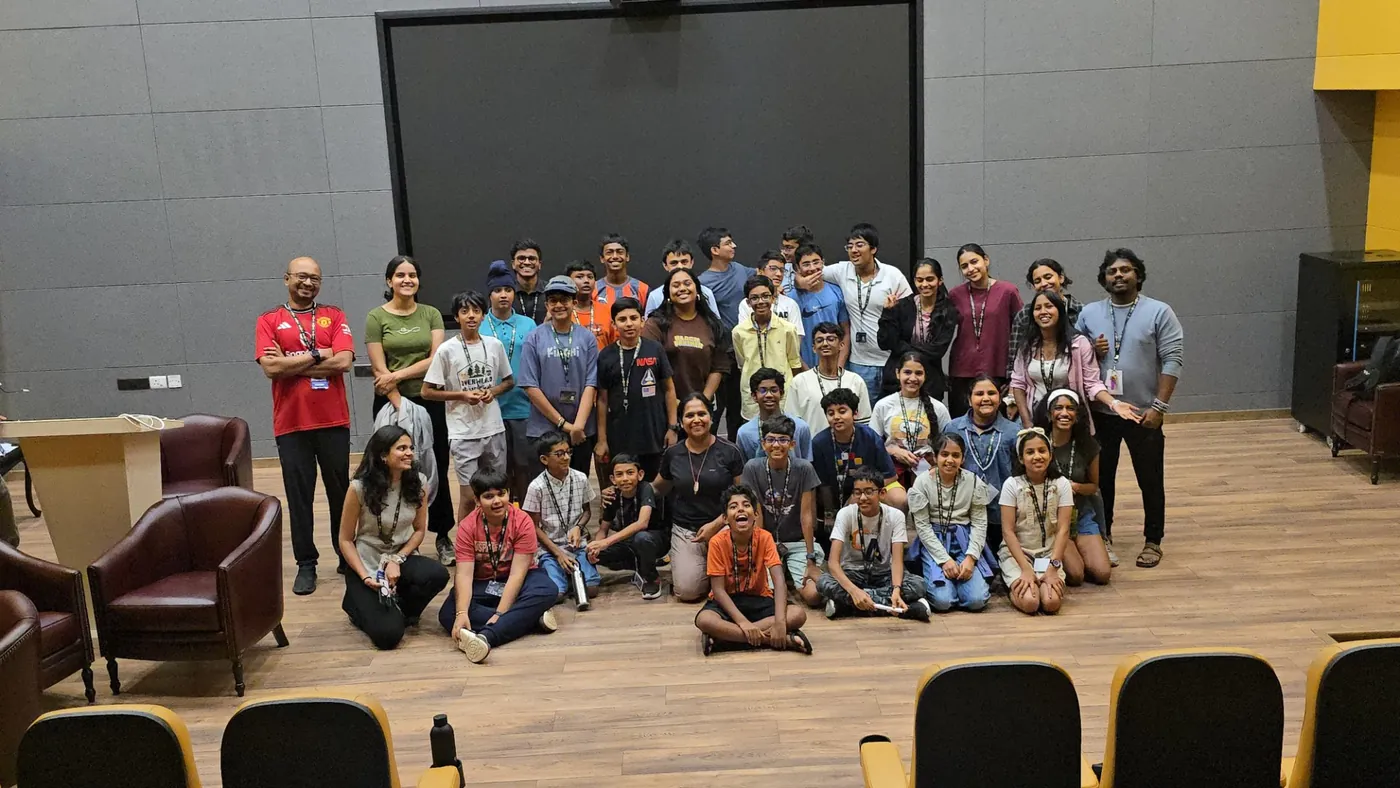
Both campuses, in pictures
MAHE Manipal · May

MAHE Bengaluru · June
Ask GenWise
Type a question, get the real answer
Answers come word for word from what the team has already said on the Parent Hours, in the Parent Handbook and in last summer's staff notes. Nothing here is generated, so nothing here is made up.
Or tap one
Straight answers
The eight questions every family asks
- When and where?
- 9–29 May 2027 at MAHE Manipal; 13 June–3 July 2027 at MAHE Bengaluru. Three weeks each.
- What does it cost?
- ₹1,60,000 (GW Explorers) or ₹2,10,000 (GW Wizards), all-inclusive. Early-bird ₹1,20,000 / ₹1,70,000 until 31 Dec 2026.
- What holds a seat?
- A ₹40,000 deposit, fully refundable until 28 February 2027. The balance is due by 25 March 2027, and you can pay it in parts.
- Can my child call home?
- Residential coaches hold the students' phones through the day, and hand them back for a phone window each evening, 9:00–9:30 pm, to call home. Lights out at 10:00 pm.
- Can we visit?
- No visits during the program — a visit resets a child's first-week adjustment. Parents are welcome at the two-hour open day on the last day; special cases are discussed one-to-one.
- How closely are they supervised?
- One residential coach or teaching assistant for every five students, round the clock (residential coaches alone are one per ten), a nurse on site, a doctor on call 24×7, and a week of staff training before the program.
- How big is a class?
- No GW Wizards course takes more than 20 students. GW Explorers learn in batches of 25, each with one instructor and two or three teaching assistants.
- Who can I talk to?
- +91 81238 77635 or gifted@genwise.in — the team answers WhatsApp too.
Everything else
42 questions, answered the way we'd answer on the phone
Rebuilt in September 2026 from the two Parent Hour recordings, the Parent Handbook and the staff's own notes from last summer — so these are the real answers, not the brochure's.
The basics
What exactly is the GenWise Summer Program?
A residential summer program for gifted students in Grades 6–11, run on a university campus. Your child takes one course all the way down for the whole program, lives on campus with GenWise residential staff, and comes home with a cohort of children who think the way they do. GSP'27 runs in two editions: 9–29 May 2027 at MAHE Manipal and 13 June–3 July 2027 at MAHE Bengaluru — three weeks each.
Can my child attend as a day student?
The full program experience is only residential. In the past we have made exceptions case by case, for a medical or similar reason. If that applies to your child, please get in touch with the team.
Who is it for — and does my child need to be 'certified gifted'?
It is built for gifted children, the ones who finish the textbook and keep asking. The single most important thing is that your child is curious and wants to learn. An Ei ATS medal is the fast lane in. A certificate is not required to be considered: plenty of our strongest campers arrived without one, and the call after you apply is where we find out together whether this is the right room for your child.
What is the difference between GW Explorers and GW Wizards?
GW Explorers (Grades 6–7, ages 10–13) take both of the year's Explorers courses, one each week, the whole batch together — at that age a shared course builds a bigger cohort and more shared experience than a choice would. GW Wizards (Grades 8–11, ages 13–17) choose one course from the year's list; these students have had time to find what they care about, so the courses are specific. Grades are the ones your child will be entering in 2027–28, not the one just finished.
Which two weeks do Explorers attend, and on what dates?
GW Explorers attend the last two weeks of each edition: 16–29 May 2027 at MAHE Manipal, or 20 June–3 July 2027 at MAHE Bengaluru. GW Wizards attend all three weeks. Drop-off is on the Sunday and pick-up on the Saturday either way.
My child is younger (or older) than the band. Can they join the track above?
We would rather they didn't, and the reason is honest: courses run at a level about two to three grades above school, on top of the band they are written for, so a younger child in GW Wizards is facing a double stretch while also being away from home for the first time. Both at once is too much. The team's standing recommendation is the cohort your child belongs to — and the commitment made on every Parent Hour is that every child is challenged at the edge of their own capacity, whichever track they are in. Grade 12: we don't run a residential program for grade 12 in 2027, but leave your details and you'll hear first if that changes.
How many children are in a class, and in the program?
No GW Wizards course takes more than 20 students, and that cap is held. GW Explorers learn in batches of 25, each with one instructor and two or three teaching assistants. The May edition is the bigger one and June is smaller, which means a smaller class and more of the instructor's attention in June. The philosophy, the staff and the campus routine are the same in both.
Which edition should we choose?
For GW Explorers both editions have their two courses on the courses page: May is Build It, Break It and The Pleasure of Finding Things Out; June is The Pleasure of Finding Things Out and Squishy Circuits. For GW Wizards it comes down to the course list — May carries more course choices, June fewer — and to your school calendar. The trade-off the team states openly: May gives a larger peer network, June gives a smaller class and more individual attention.
A day at camp
From the GSP'26 handbook and the Parent Hour walkthrough of the daily routine.
What does a day actually look like?
07:00 Wake up — beds made, wing sorted, laundry out. 08:00 Breakfast. 09:00 Morning course block — your chosen deep-dive. 11:00 Juice and a snack, then straight back into it. 13:00 Lunch. 14:00 Afternoon session until 4 pm — labs, builds, drafts, arguments. 16:00 Tea and snacks. 17:00 Evening activity — sport, quizzes, drawing, karaoke. A different one every day. 19:00 Dinner, then evening adda — and on weekend nights, DJ night or talent night. 21:00 Phone time: thirty minutes to call home. 22:00 Lights out. The evening activity is the part the team calls the heart of the program — a different one every day, and everyone picks the one they want.
Can my child call home? What is the phone policy?
Residential coaches hold the students' phones through the day, and hand them back for a phone window each evening, 9:00–9:30 pm, to call home. Lights out at 10:00 pm. For anything urgent, parents always have the batch WhatsApp group and a direct line to the program team.
My child sleeps at 8pm. How will they manage a 10pm lights-out?
This is asked on every Parent Hour, and it is handled child by child rather than by rule. The pre-arrival medical form asks specifically what time your child sleeps and wakes; that answer goes to the residential coach responsible for them, who watches for tiredness, keeps the conversation open with the child, and stretches the timings where needed.
Who is looking after my child outside class?
The staff splits in two. Teaching assistants look after students inside the classroom — closely enough that a child who needs the washroom at the end of the hallway is walked there and back. Residential coaches take over outside it: each one is responsible for about ten students, and that group becomes a small family with its own name and its own friendly rivalries. Overall, one residential coach or teaching assistant for every five students.
Who will my child share a room with?
A stranger, on purpose. We ask parents not to request that their child room with a friend: two to a room, paired with someone they have not met (usually one year apart in grade, never more than two), is one of the quiet lessons of the program — and the one alumni mention years later.
What happens in the evenings and at weekends?
A different activity every evening, chosen by the student — sport, quizzes, drawing, karaoke — plus DJ nights and talent nights on weekend evenings. Weekends also carry additional mini-courses, and evening 'adda' sessions where instructors talk about whatever they love; more than one alum picked a school subject because of one of those. Children who have never sung or danced in their lives end up on stage; parents get the recording.
Safety, health and homesickness
How is the campus secured?
Boys and girls stay in separate hostels, on floors reserved entirely for the program, with security at the main entrance and each dorm lobby, and no unauthorised person permitted on them. The Manipal campus has hosted GenWise for years, and the block used is set aside for the program.
What training do the staff have?
Every teaching assistant and residential coach goes through a week of training before the program begins — what to do, and what not to do — on top of a background check. The team on site is around 75 people; the three or four faces on a Parent Hour are a small part of it.
What about medical care?
A nurse is on site through the program and a doctor is on call 24×7. At the May campus, Kasturba Hospital — a full multi-speciality teaching hospital — is minutes from the hostels; the June campus is a city campus with hospitals close by. If a student ever needs the hospital, a GenWise staff member goes with them and you are called at once.
Can we visit our child during the program?
No — and the reason is not administrative. The first two days are genuinely hard for many children, especially the younger ones, and the staff's whole job in that window is to get them through it. A visit resets that progress, and it takes another two days to recover. So there are no visits during the program, with exceptions discussed one-to-one for genuinely special circumstances. Parents are welcome at the two-hour open day on the last day.
What if my child is homesick?
Expect the first two days to be hard. The team says so plainly, and one of them says it as a parent whose own daughter went through it in Grade 6. Getting a child through those two days is our job: coaches are trained for exactly this, older students help the younger ones, and there is a call home every evening. Across five GSP summers, and camps this team has run since 2008, the change after those two days is what parents remember. On the last day the children cry because they don't want to leave each other. If a child does need to go home early, a person on the team handles it with you, case by case.
My child is vegetarian / has a food allergy.
Veg and non-veg lines at every meal — breakfast, lunch, evening snacks and dinner — with Jain and Halal options on request, and spice kept low. Medical and dietary needs are collected on a form before arrival, so catering is arranged to each student's stated requirement ahead of the program. Allergies and dietary needs from that form are flagged to the mess and to your child's coach personally.
Are students ever off campus?
Only on escorted excursions, with headcounts on boarding and return and the same supervision travelling with them. Courses do go out: GSP'26's neuroscience cohort visited the MAP Anatomy and Pathology Museum, and the architecture students spent a day at a practising architect's studio and a field visit to the heritage house they had been modelling.
What is the boy–girl ratio?
Close to even. For the last two years the cohort has run roughly 50:50, and so has the staff — though it varies by course (GSP'26's neuroscience class was almost entirely girls).
Academics
How hard is it, really?
Hard on purpose. Courses are pitched about two to three grades above school, and TAs regularly watch students argue concepts with the instructor that they themselves first met at undergraduate — sometimes master's — level. The promise made on every Parent Hour is that each child is challenged at the edge of their own capacity, which is why PhD-level mentors teach middle-schoolers here.
Who teaches?
Working researchers and practitioners — an economist from the Takshashila Institution, an astrophysicist, a practising architect, AI engineers, a marketing strategist. Not lecturers delivering a syllabus: people who do the thing, teaching hands-on, with questions encouraged rather than tolerated. Students are explicitly told not to accept a claim just because an instructor made it.
Is there homework? Are there grades?
No homework to take home and no grades. The work happens in class and in the project, and evenings are for activities. Courses end in something made — a working build, a trained model, a defended policy brief, a scale model of a building — presented at the open day. What comes home instead of a mark sheet is a written, individual feedback note from the instructor; parents routinely say it is uncannily accurate for three weeks of contact.
Is AI part of the teaching?
Yes, and critically. There is a full AI/ML course, and AI shows up inside other courses too — GSP'26's neuroscience class ran a joint session with the AI class comparing neural networks to the real thing, and students analysed their own reflective journals with it. The thread through all of it is judgment: where the tools help, where they mislead, what they cost.
Is it only maths and science?
No. Economics and public policy, architecture and design, and writing all run as courses, and the evening sessions carry storytelling and creative-writing work. At the Explorers level there is no separate literature course — the courses there are broad by design — but the evenings and weekend mini-courses are where that appears.
Does anything continue after camp?
Yes, and the team is blunt that three weeks alone is like watering a plant for a fortnight. Alumni stay connected through Club GW and the Insider Circle's year-round sessions (its 2026–27 intake is closed), and Gifted Lab runs online through the school year (classes at the weekend, with recordings if one is missed). Several alumni have gone on to longer mentored projects with GenWise mentors.
My child already does coaching or olympiads. How is this different?
It is a different kind of work, not more of the same. One course for three weeks, about 82 hours of learning for GW Wizards, no exams, a showcase on the last day and a written note from the instructor. No GW Wizards course takes more than 20 children. And your child lives with peers who think the way they do, which coaching can't give. One boy from Chennai came for Explorers, then Wizards, fell for economics in the evening sessions and later chose it as a school subject.
What do parents notice when their child comes home?
Often less about academics than you'd expect. A father whose daughter is in her third year with us says it is "less about academics and more about everything else": keeping her room clean, being on time without a parent chasing her. Others notice the friends. One group met again at the airport after camp and, in a parent's words, "created a riot".
Is the certificate worth anything for admissions?
Almost nothing, and we would rather say so. A GenWise certificate signifies that your child attended a gifted program — no more. What actually carries weight, in the words of a team member who has sat on US university admissions committees, is what a student can show and articulate: a real project, done deeply, often continued with a mentor long after the summer.
Fees, payment and refunds
What does it cost, and what is included?
GSP'27 fees: ₹1,70,000 for GW Wizards (21 days) and ₹1,20,000 for GW Explorers (14 days), in either edition. That is everything on campus — tuition, materials, boarding, every meal, 24-hour residential care, excursions and the showcase, with 18% GST. Not included: travel to and from campus, personal spending money, a laptop, and for the two AI-heavy May courses (Policy Paths, Code the Future) a paid ChatGPT or Claude plan. Staff collect children travelling alone from the airport or station.
How does payment work?
A deposit of ₹40,000 reserves the seat, whichever track, and it is fully refundable until 28 February 2027. The balance is due by 25 March 2027, and you can pay it in parts before then. If paying it all at once is the worry, say so on the call. It is a normal request.
What if we have to withdraw?
Until 28 February 2027 the deposit is fully refundable. After that a published ladder applies — the earlier you tell us, the more comes back: 90% of fees paid if you withdraw 30 days or more before your child's start date, 70% from 15 to 29 days, 50% inside 15 days. Health and family emergencies are handled separately and personally. And if you simply need to move to next year's program, the fee carries forward at the same value — the admission moves with it.
Should we wait until next year?
That is a fair choice, and we won't chase you. Ask yourselves one thing: what would need to be different next year? If the answer is "not much", the deposit is fully refundable until 28 February 2027, so holding a seat now costs nothing if plans change.
Can both of us talk to the team before we decide?
Yes, and we'd rather you did. Tell us a time that suits both parents and we'll call then. Fifteen minutes is usually enough.
Is it safe to book June now?
Yes. The June courses are confirmed, and the deposit is still fully refundable until 28 February 2027.
How many seats does each course have?
No GW Wizards course takes more than 20 students. GW Explorers learn in batches of 25, each with one instructor and two or three teaching assistants. We don't quote "seats left" numbers.
Getting there, and what to bring
How do students get to camp?
Drop-off is a Sunday and pick-up a Saturday, at both campuses. Families can drop off directly. For May, MAHE Manipal is about 65 km from Mangalore International Airport and about 5 km from Udupi railway station; for June, MAHE Bengaluru is a direct flight or train from most Indian cities. Students travelling alone are collected by GenWise staff from the station or the airport, at both campuses.
What should my child pack?
The handbook carries the full packing list — summer clothes, sports gear, something semi-formal for the showcase and talent night, toiletries, water bottles, a small medical kit and ID copies. A laptop is needed for some courses; the course page says which. Bedding is provided, rooms are cleaned by housekeeping, and a laundry service runs through the program.
What is the Parent Portal?
Every enrolled family gets a login at parent.genwise.in. It is where the medical form, travel plans and dietary needs are collected before arrival, and where program information lives. The Parent Handbook is shared alongside it and answers most of what comes up before reporting day.
How will we hear from the program while it runs?
A parents' WhatsApp group per batch, with photos and notes from the ground, plus a direct escalation line to the program team. If a child is unwell you hear from us directly, and there is a phone window every evening.
Anything missing is a WhatsApp message or a call to +91 81238 77635 away.
See it with your own eyes
Every dorm and food question, answered on the call
With specifics, not brochure language. Apply and we call you back — or call us now.
Free · 20 questions · 35 minutes. Pay ₹40,000 to hold a seat. Change your mind until 28 February 2027 and all of it comes back.