Skip to content
GenWise

Course catalog · GW Explorers (Grades 6–7)

Electronics you can squash: real circuits built from conductive play dough.

Circuit fundamentals through dough, LEDs, buzzers and motors, then paper circuits in light-up cards, sculptures and origami animals. The fastest route we know from "electricity is a bit scary" to "I built that".
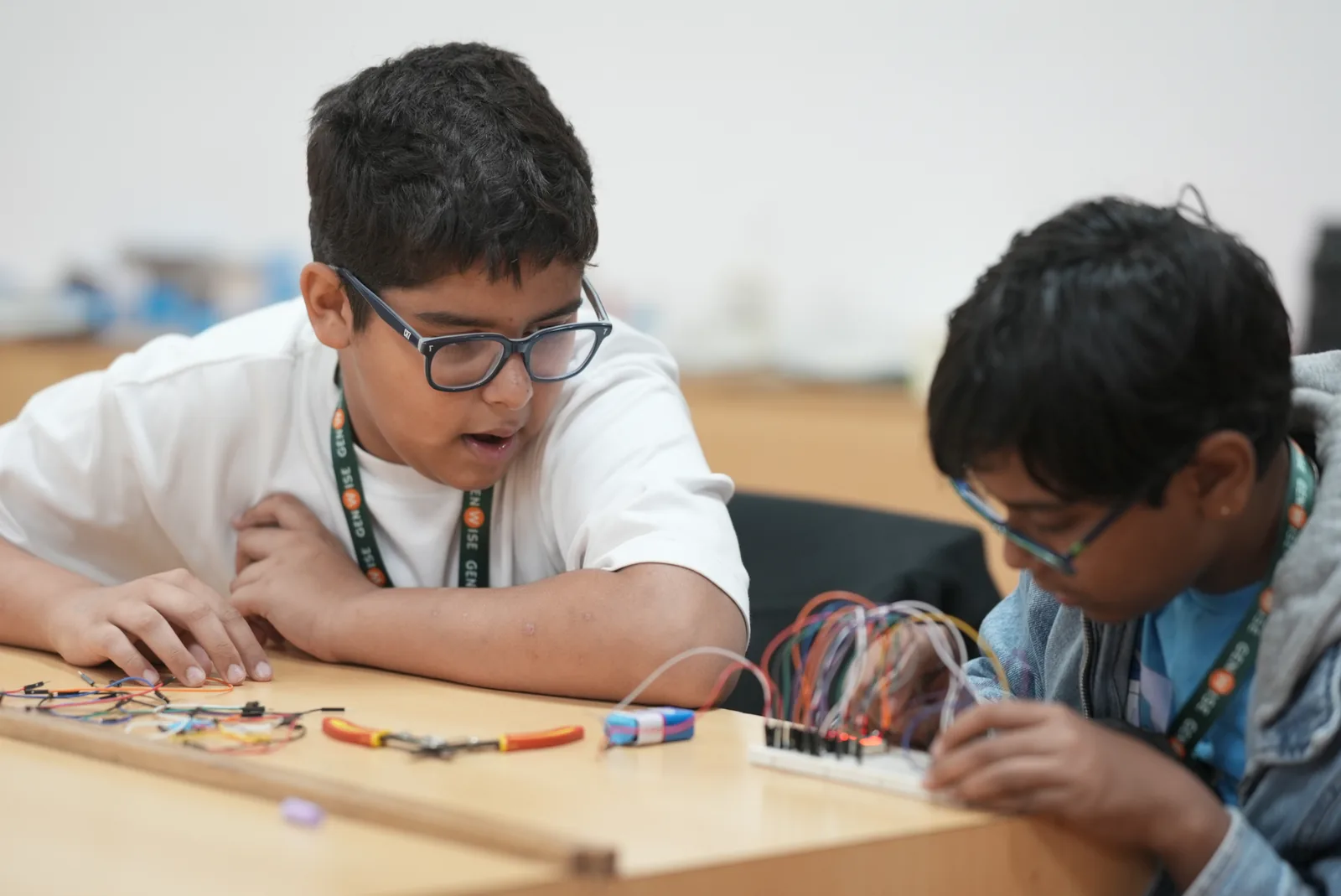
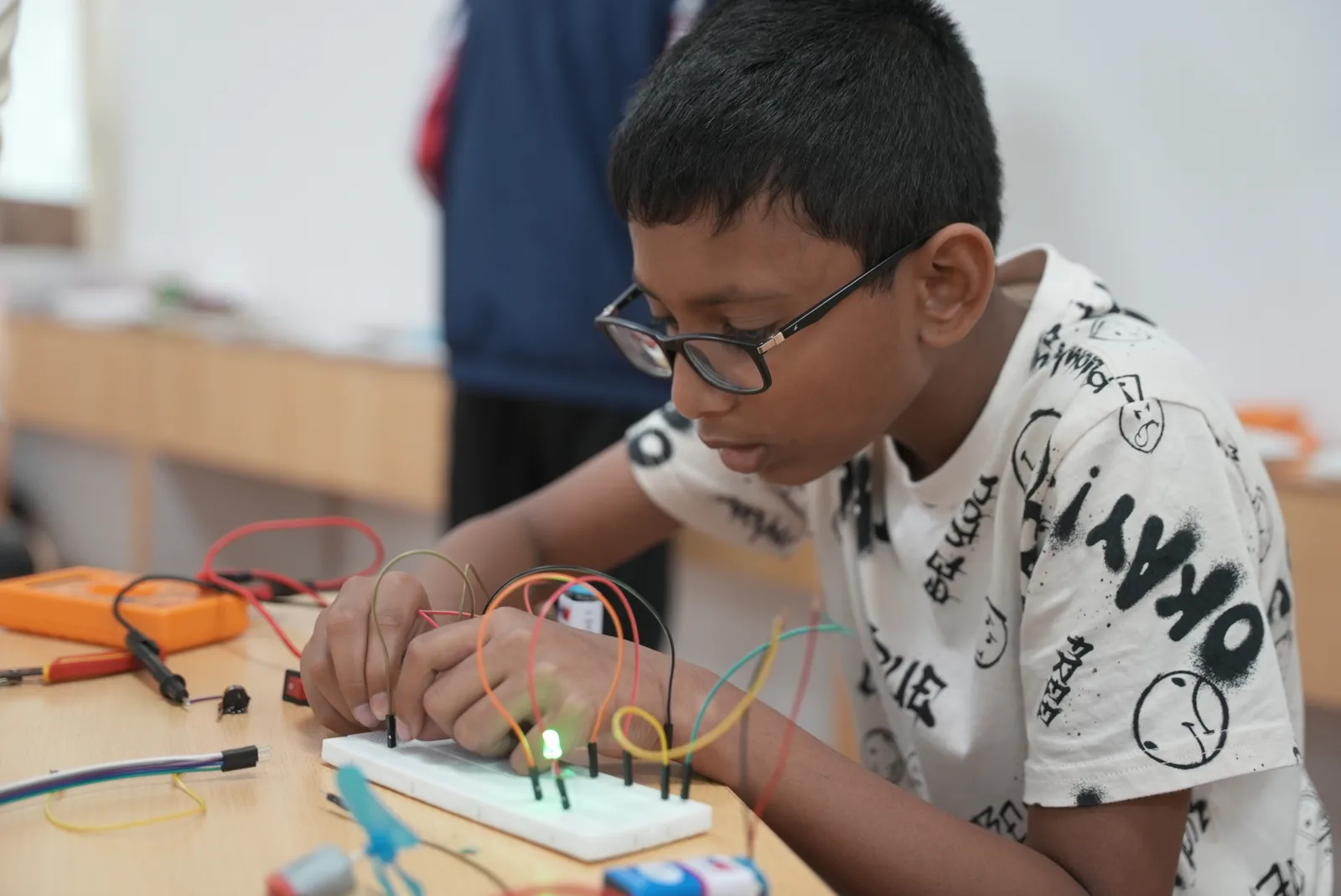
An Explorer smiling over the circuit he wired on his breadboard, Squishy Circuits, GSP'26

Taught by Muralidhar K, Senior mentor & course designer · BTech, IIT Madras · 20+ years in the social sector. Meet all the mentors

₹1,20,000 ₹1,60,000, GST included. Early-bird till 31 Dec 2026.

20 June–3 July 2027.

Free · 20 questions · 35 minutes

Pay ₹40,000 to hold a seat. Change your mind until 28 February 2027 and all of it comes back. The refund terms

FacilitatorMuralidhar K
Duration1 week
Teaching hours30
GradeGrades 6–7 (as of 2027–28)

What you will do

Electronics you can squash: from conductive dough to circuits that light up when folded.

The plan

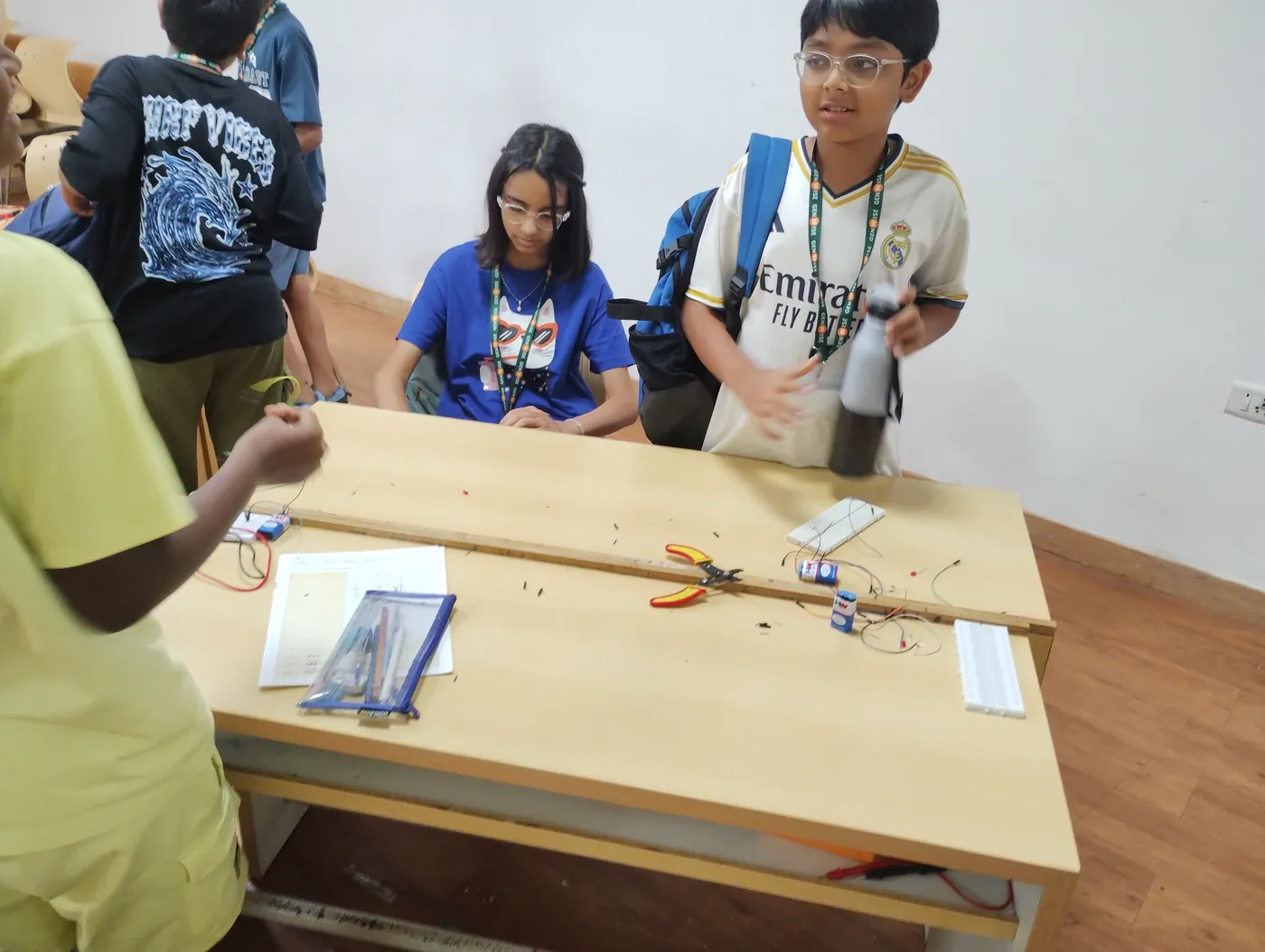
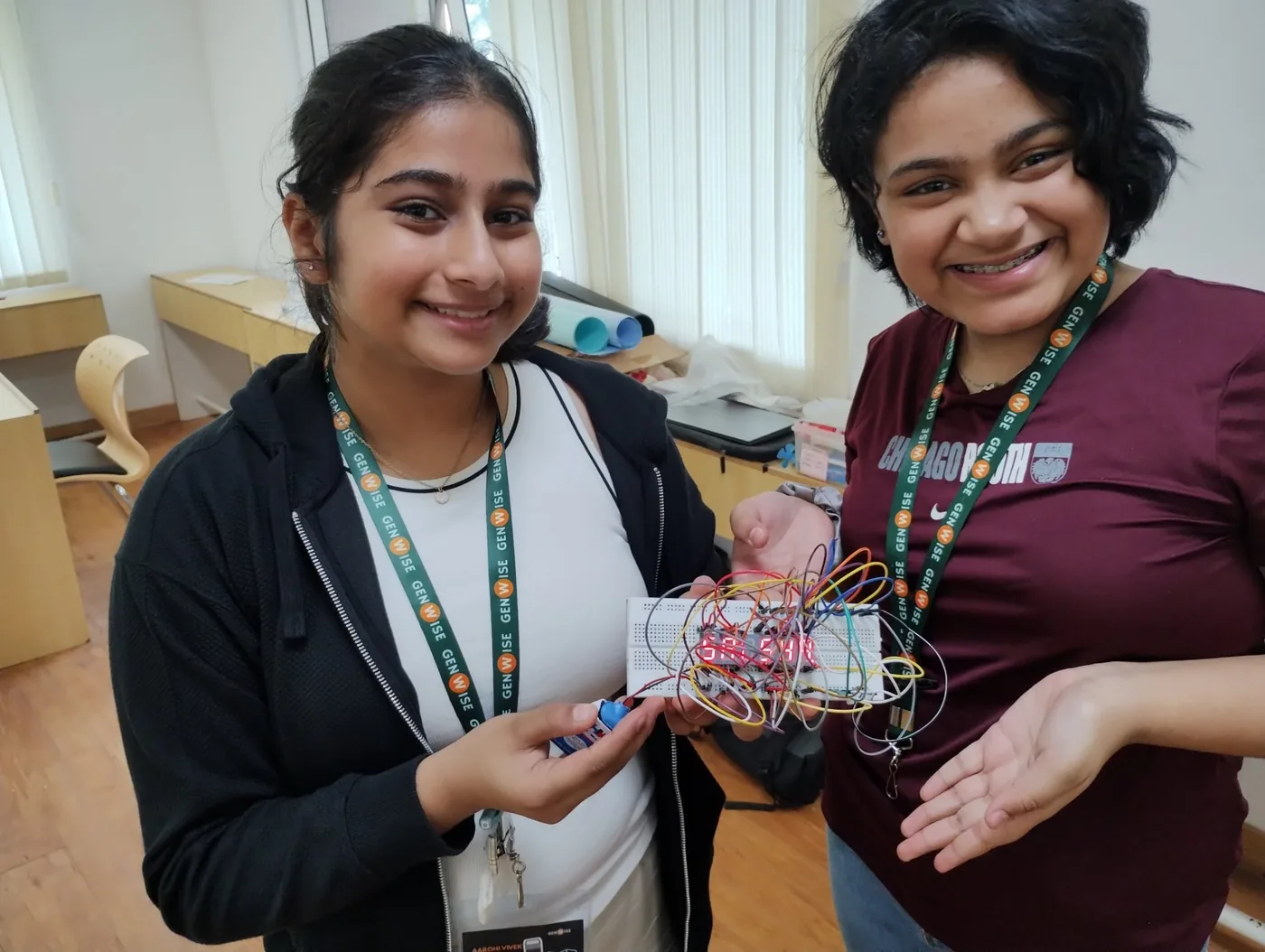
  1. Two students holding up the wire-and-dough build they finished, Squishy Circuits, GSP'26

    Squash and light

    Conductive and insulating dough, an LED and a battery: the first circuit is one children can hold.

    • Conductive vs insulating dough
    • Closing the loop
    • Short circuits made visible
    • LEDs, buzzers and motors
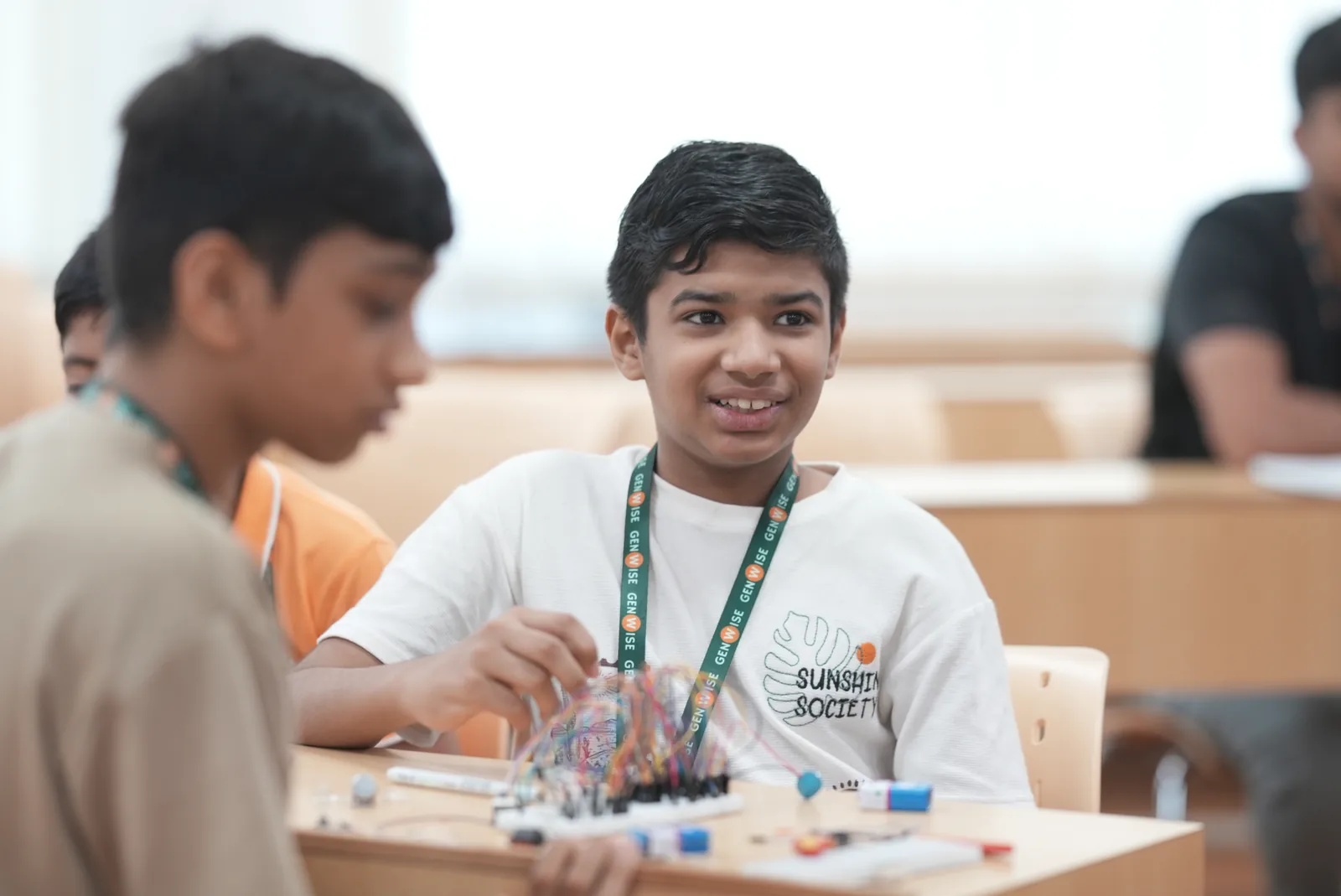
  2. Two Explorers wiring their breadboards side by side, Squishy Circuits, GSP'26

    Control the current

    Potentiometers dim an LED, an RGB light blinks on a 555 oscillator, and digits appear on a seven-segment display.

    • Potentiometers and brightness
    • The 555 oscillator
    • Seven-segment displays
    • Reading a circuit diagram
  3. Explorers around a circuit board, Squishy Circuits, GSP'26

    Paper that glows

    Copper tape and LEDs turn cards, sculptures and origami animals into circuits of their own design.

    • Paper circuits
    • Light-up cards
    • Origami that lights up
    • Your own glowing build
Questions to wrestle with
  • Why does the bulb light here, but not two centimetres to the left?
  • What is a short circuit — and why does dough make it obvious?
  • Can you build something that lights up only when it's folded?
Page two

How does this course help your child?

Innovative pedagogy

Dough makes electricity touchable: children see a short circuit happen in their hands before they ever draw one.

Academic acceleration

Series, parallel, resistance and timing circuits, met through working builds years before the physics chapter.

Cognitive skillsets

  • Following a circuit
  • Debugging what won't light
  • Careful hands
  • Designing a build

Peer networks

Circuits are built in pairs and small teams, so every fix is talked through out loud.

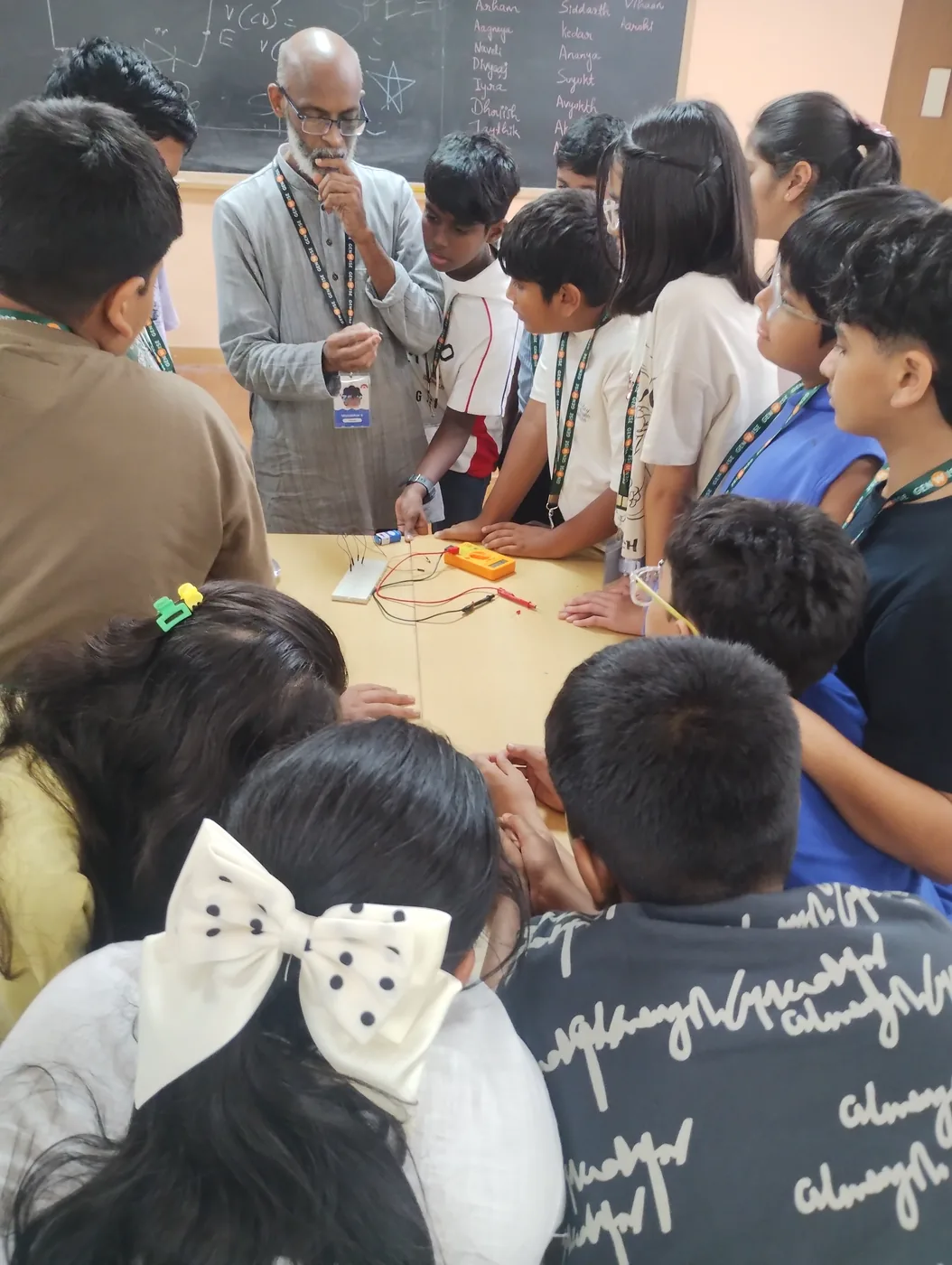
The class crowded around a bench with the instructor, Squishy Circuits, GSP'26
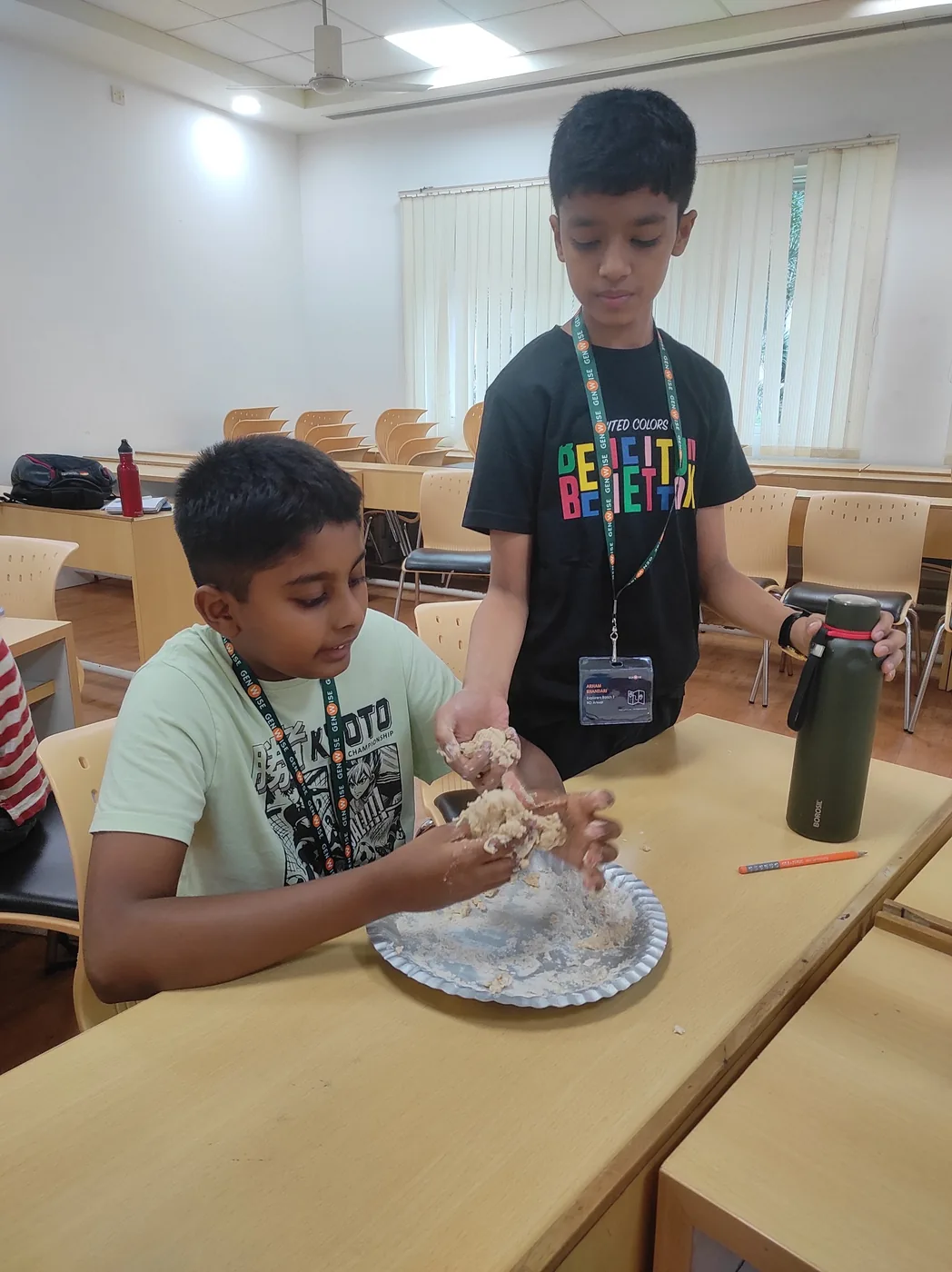
A student with the dough sculpture he wired up, Squishy Circuits, GSP'26
An Explorer lighting an LED on the breadboard he wired, Squishy Circuits, GSP'26
It ends with

At the open day, each child shows a light-up build of their own design and explains how its circuit works.

June program · 20 June–3 July 2027 · MAHE Bengaluru

Every Explorer takes two courses, one week each. In June: this one and The Pleasure of Finding Things Out: Puzzles, Patterns and Play.

Like every GSP course: three hours each morning, hands-on afternoons, a real artifact at the open day, and one residential coach or teaching assistant for every five students. The full day, hour by hour

Download the two-page course sheet (PDF)

Sounds like your kid?

Apply and tell us Squishy Circuits caught their eye — the call starts from there.

More from GW Explorers