Skip to content
GenWise

Course catalog · GW Wizards (Grades 8–11)

Hands-on experiments where the lab bench is the textbook.

A tour through experimental science — hypothesise, measure, get surprised, measure again. The course for the kid who asks "but how do we know that?" and wants to find out with their own hands.

Last May: several children got their DC motors running, the class measured the size of a molecule, and they demonstrated experiments at the end of the course.
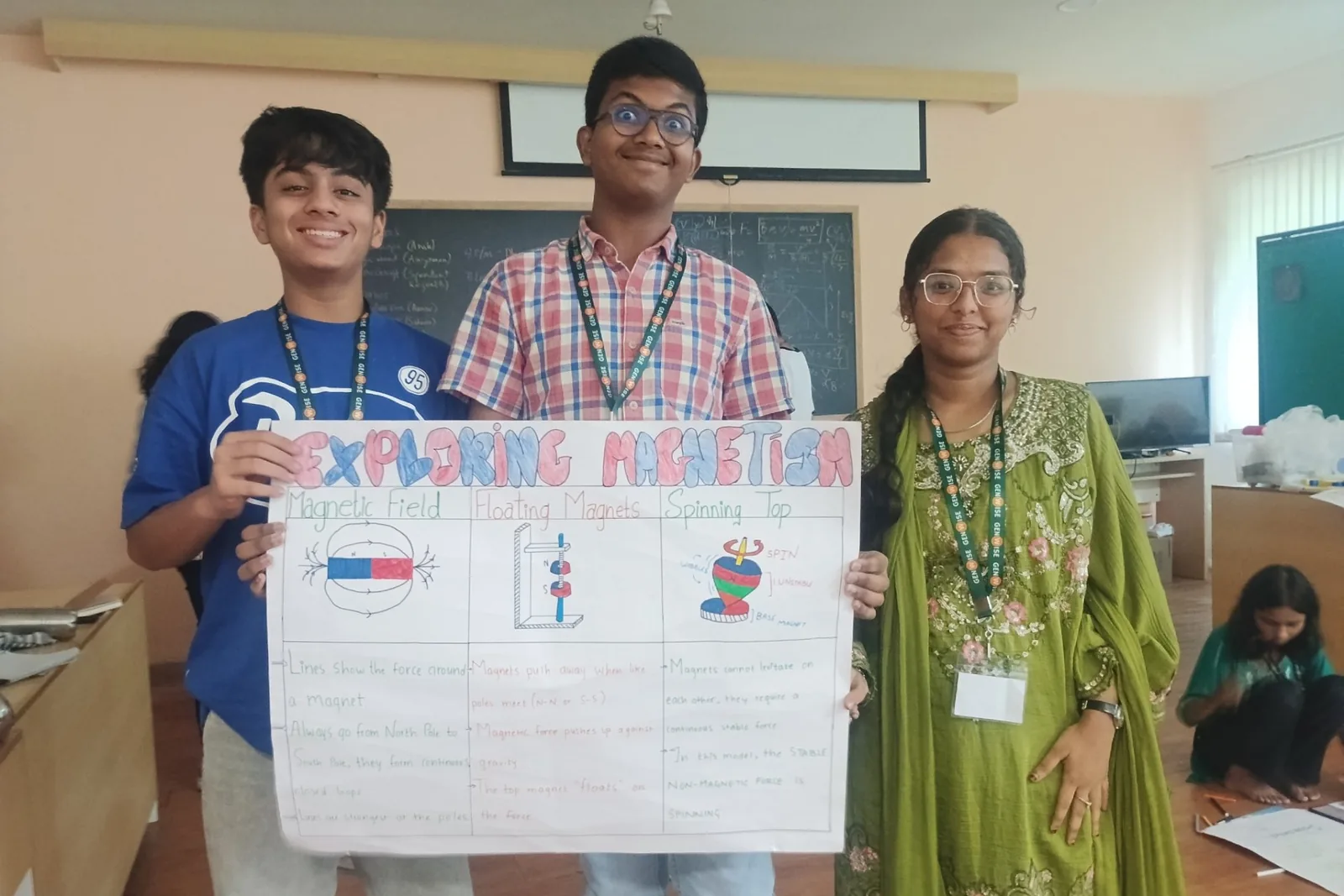
Three students holding up their poster on magnetism, Two Feet of Science, GSP'26

Taught by R.D. Prabhu, PhD Astrophysics, IISc · ESD Compact Modeling lead, GlobalFoundries. Meet all the mentors

The course, in a minute

₹1,70,000 ₹2,10,000, GST included. Early-bird till 31 Dec 2026.

9–29 May 2027 or 13 June–3 July 2027.

Free · 20 questions · 35 minutes

Pay ₹40,000 to hold a seat. Change your mind until 28 February 2027 and all of it comes back. The refund terms

FacilitatorR.D. Prabhu
Duration3 weeks
Teaching hours90+
GradeGrades 8–11 (as of 2027–28)

What you will do

Science stands on two feet, theory and experiment, and this course walks on both.

Week by week

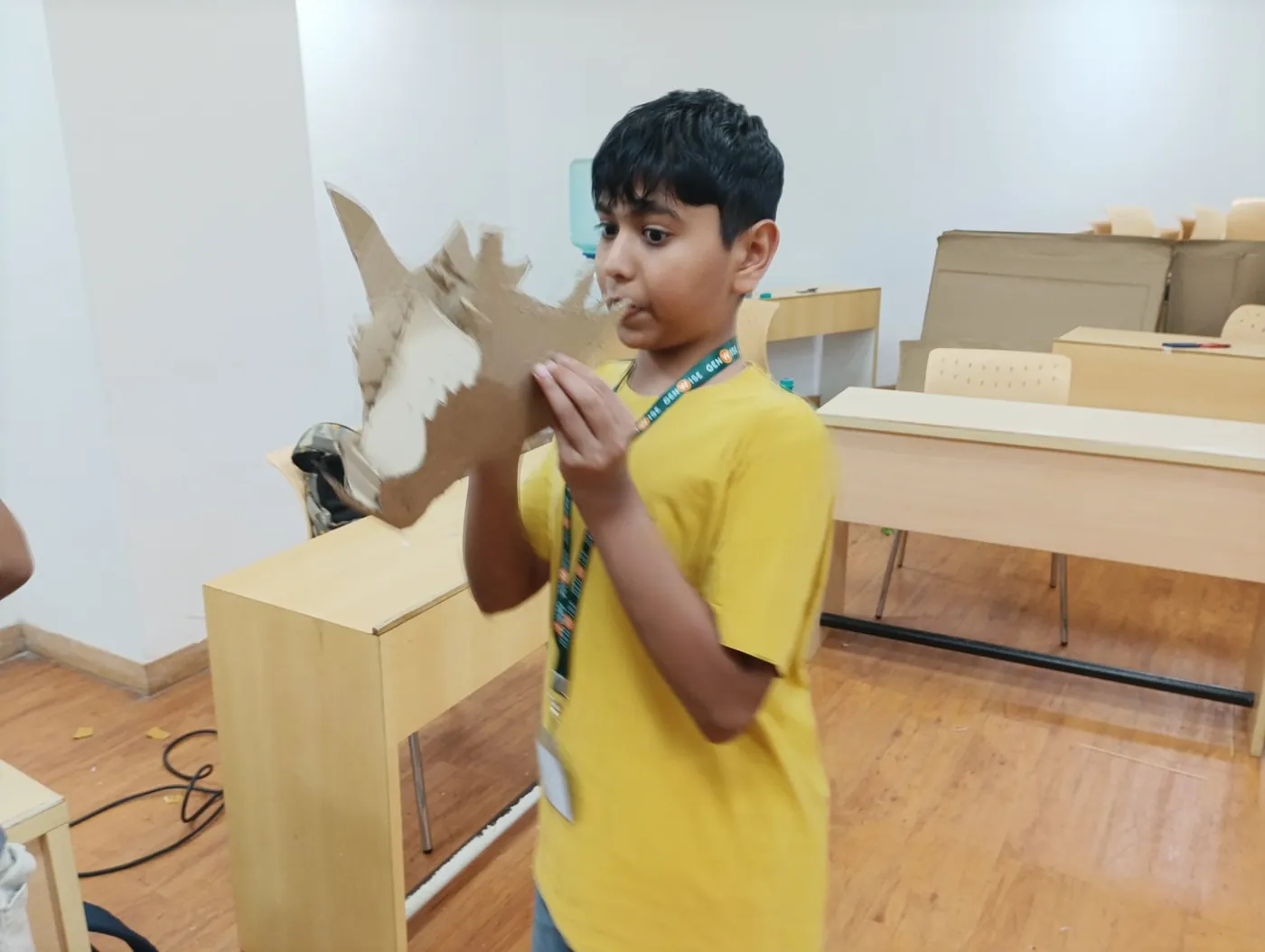
  1. A student holding up the cardboard shape he cut out, Two Feet of Science, GSP'26

    Estimation and mechanics

    Guess before you measure: Fermi problems, the size of a molecule from an oil film, then forces, free fall, buoyancy and the pendulum.

    • Fermi estimation
    • Vectors and dimensional analysis
    • Free fall and projectiles
    • Buoyancy, density, the pendulum
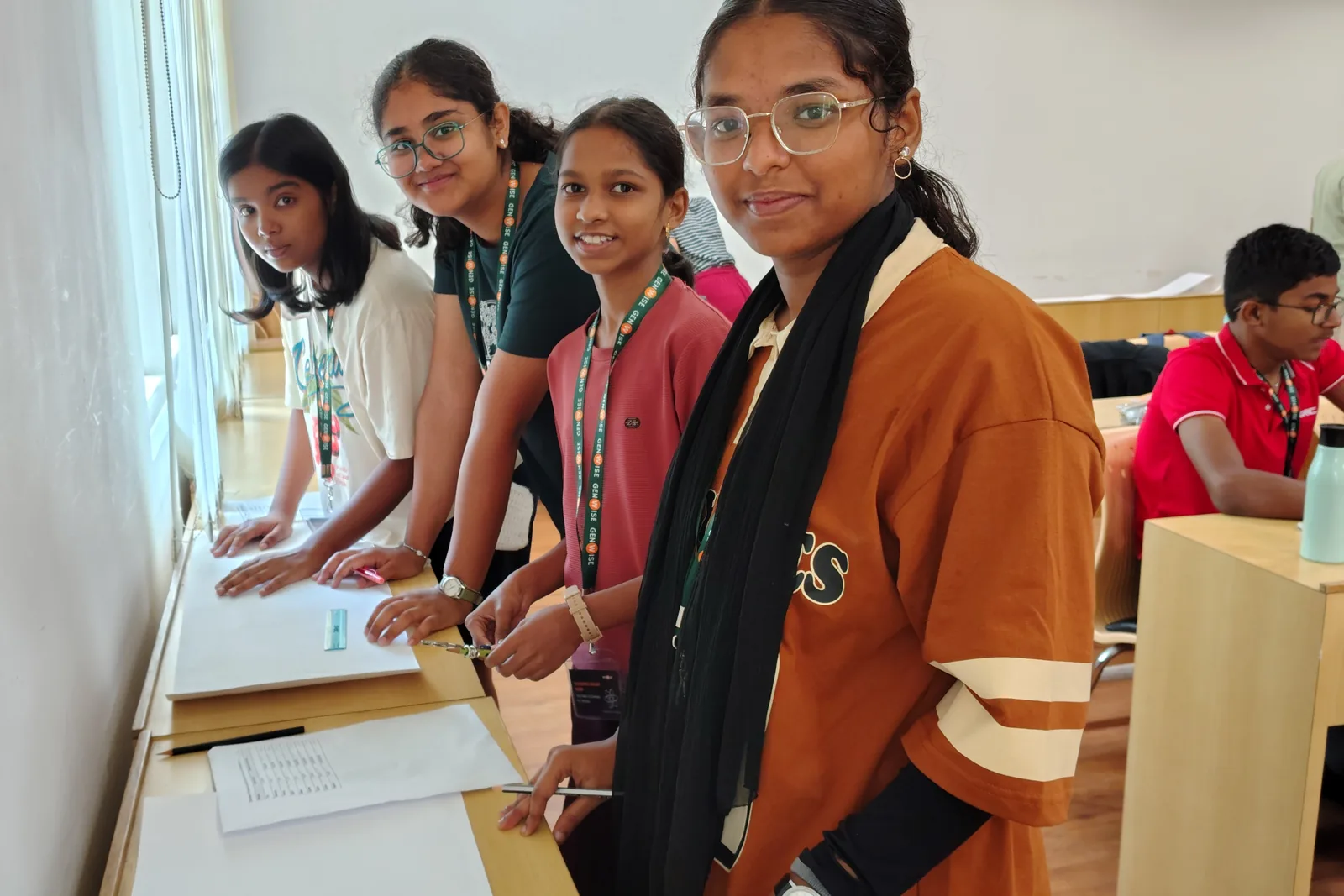
  2. Students measuring a sheet along the desk together, Two Feet of Science, GSP'26

    Fields

    Magnetism, static electricity and circuits, with iron filings, a levitating pencil, a Van de Graaff generator and an ammeter students learn to build.

    • Magnetic fields and levitation
    • Electrostatics and the Van de Graaff
    • Resistance and circuits
    • Induction: the galvanometer lab
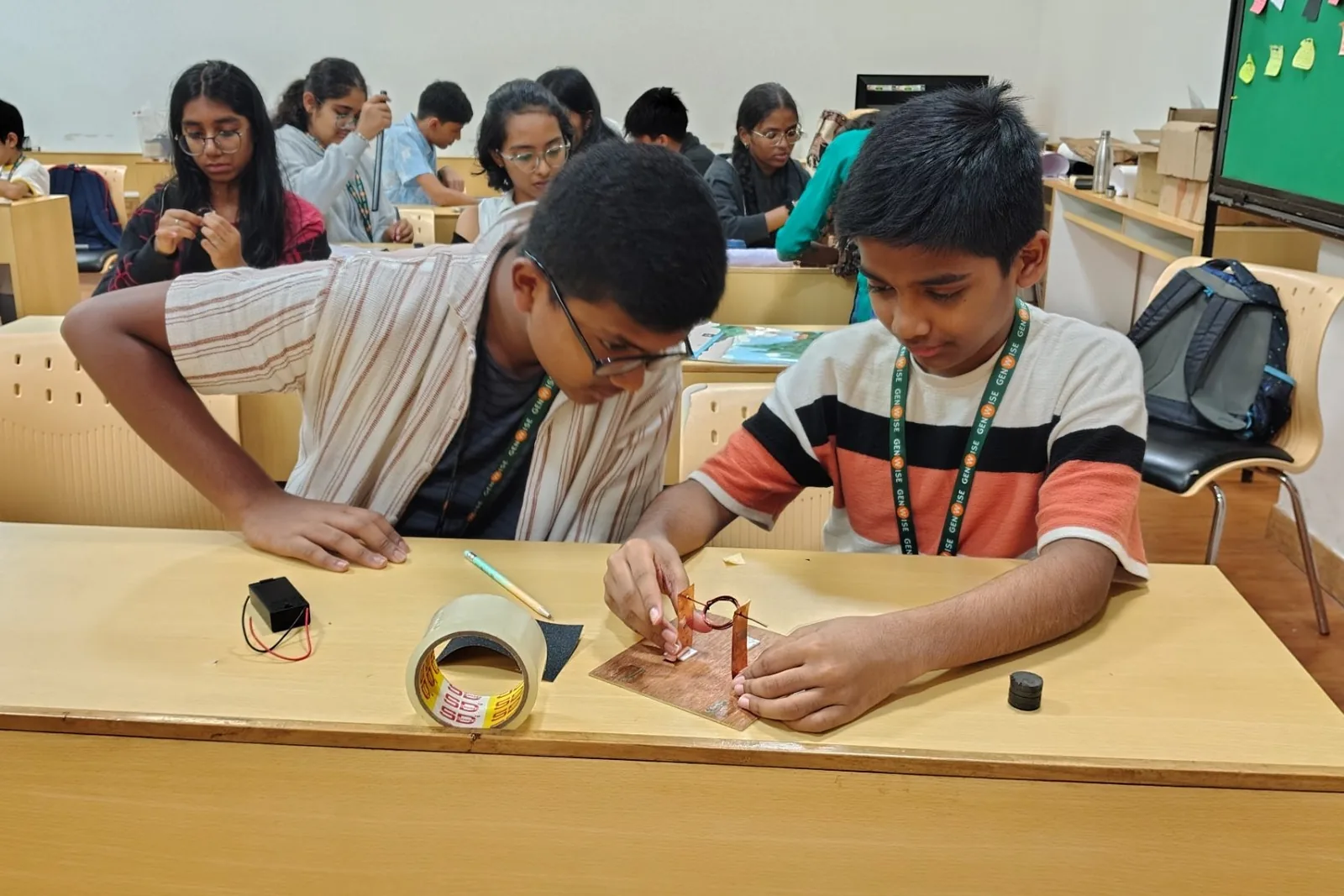
  3. Two students building a small circuit at the desk, Two Feet of Science, GSP'26

    Waves, light and the open lab

    Cathode rays, the experiment that proves light is a wave, trigonometry used to measure a tree, then an independent project for the open day.

    • Lenz's law and cathode rays
    • Trigonometry for physics
    • Interference and polarisation
    • Independent project → open day
Questions to wrestle with
  • What's the difference between 'I observed' and 'I assumed'?
  • How do you measure something you can't see?
  • When your result looks wrong — is it the world or your setup?
Page two

How does this course help your child?

Innovative pedagogy

Every idea is met as an experiment first: the class tests a hypothesis, argues about the result, and repeats it when a student doubts it. Worksheets exist to consolidate, not to introduce.

Academic acceleration

Grade 11–12 physics — vectors, fields, induction, wave optics — met two to three years early, through the apparatus rather than the equations alone.

Cognitive skillsets

  • Estimating before measuring
  • Designing a fair experiment
  • Reading a graph for a law
  • Building and troubleshooting apparatus

Peer networks

Groups run the labs together, argue over results that look wrong, and present what they found to the room.

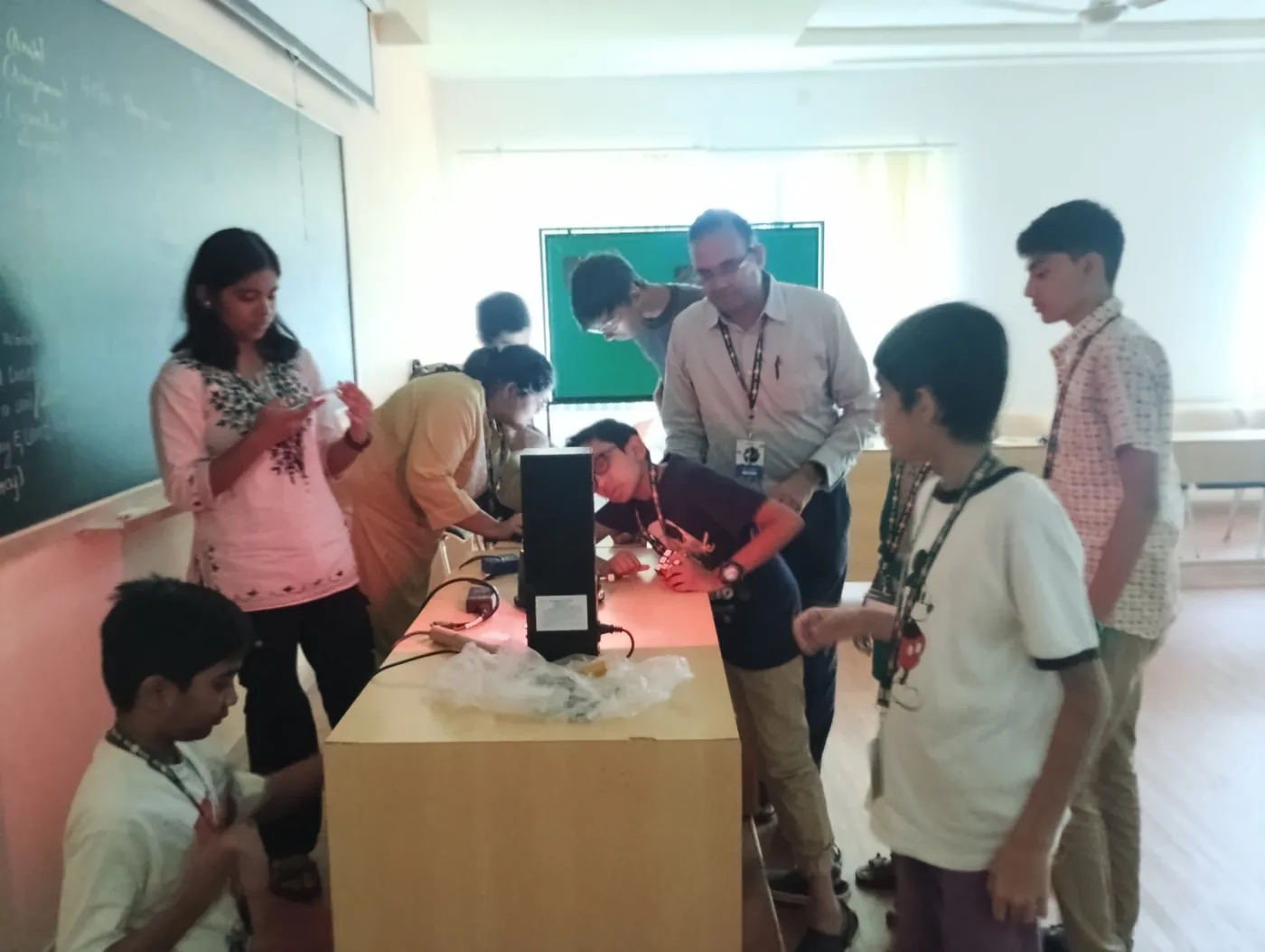
R.D. Prabhu demonstrating an instrument to a group of students, Two Feet of Science, GSP'26
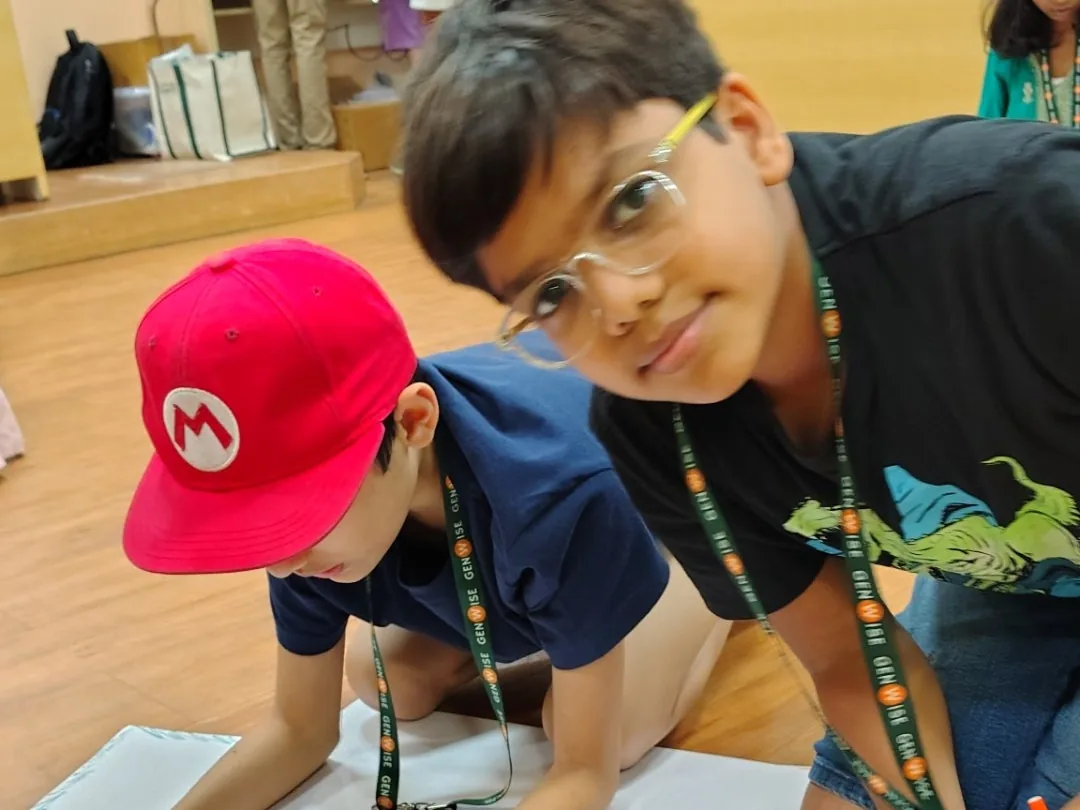
Two students drawing a poster on the floor, Two Feet of Science, GSP'26
A student with her mentor, Two Feet of Science, GSP'26
It ends with

An independent experiment, designed and presented at the open day.

May program · 9–29 May 2027 · MAHE Manipal

June program · 13 June–3 July 2027 · MAHE Bengaluru

Like every GSP course: three hours each morning, hands-on afternoons, a real artifact at the open day, and one residential coach or teaching assistant for every five students. The full day, hour by hour

Download the two-page course sheet (PDF)

Sounds like your kid?

Apply and tell us Two Feet of Science caught their eye — the call starts from there.

More from GW Wizards